Press Release: Launch of the UN Senior Leadership Appointments Dashboard

Press Release

The Center on International Cooperation and the Center for Global Affairs at NYU are launching an online dashboard aimed at tracking diversity at the leadership level for the United Nations. The new UN Senior Leadership Appointments Dashboard collates information issued as press releases by the UN about appointments of its most senior leaders since 1996, tracking various measures of diversity including gender, national origin, age, and educational background.
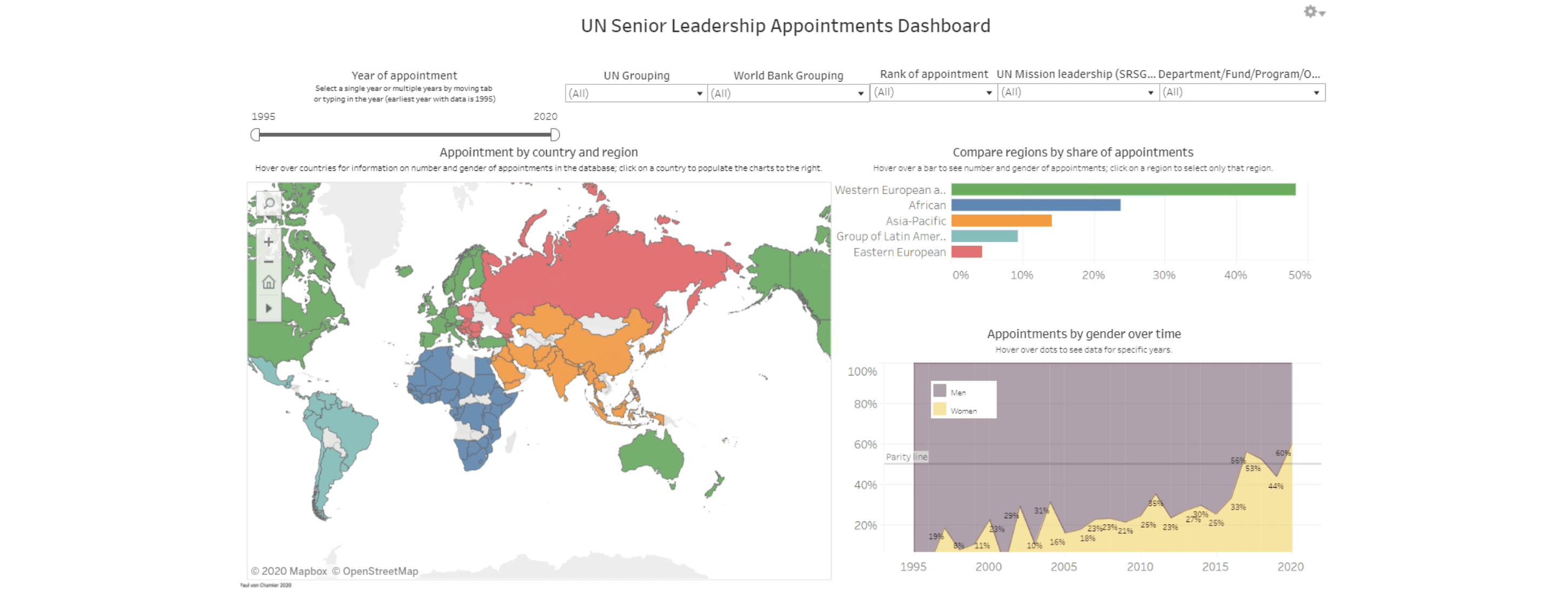
A screenshot showing the UN Senior Appointments Dashboard.

“We used a machine learning-based web scraper to collect information from press releases in a fraction of the time it would have taken a human to do it,” explains Paige Arthur, deputy director of the Center on International Cooperation (CIC). “For the first time, we have rich information on more than 1,300 appointments at the UN’s most senior level—the Under-Secretaries-General and the Assistant Secretaries-General rank.”

The dashboard has a wide range of uses.

For example, an analysis using the dashboard has shown that for the most senior leaders in UN peace operations field missions, appointments of women have surged since 2017 under current UN Secretary-General, António Guterres. However, the research, conducted by Foteini Papagioti, a graduate of the Center for Global Affairs (CGA), and Paul von Chamier, a research officer at CIC, shows that overall since 1996, 78 percent of appointments in these roles have gone to men.

A commitment to appointing increasing numbers of women has been a core part of the current Secretary-General’s Gender Parity Strategy, with a view to achieving gender balance, particularly in the UN’s most male-dominated institutions such as UN peacekeeping missions.

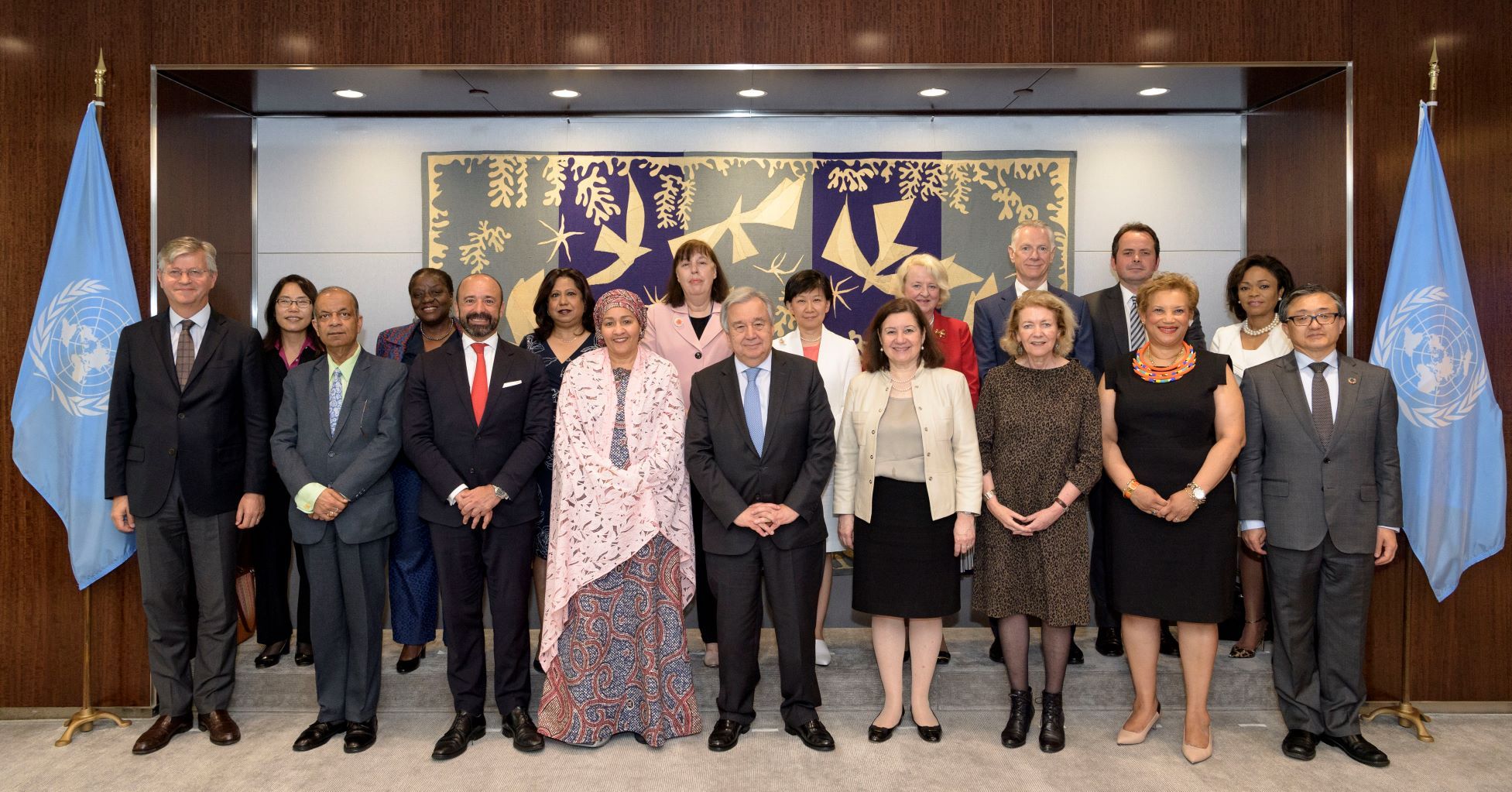
Ameerah Haq, former special representative of the Secretary-General (SRSG) for Timor-Leste, observes, “I recall when I was on my way to Timor-Leste in 2010 to take up my post and was asked to attend a meeting of SRSGs in Montreux. As always, a group picture was taken, and I was the only woman in that group. And I recall thinking, ‘This is 2010—it’s not 1950 or 1960. Can we not do better than this? What is it going to take to flip this picture to have one man among women SRSGs?’ ”

The dashboard also broadens the discussion on diversity at the UN to other areas. In terms of national origin, appointments are skewed, with approximately 50 percent of all senior appointments going to countries from the Western Europe and Others Group (WEOG), which includes North America and Europe. The rest of the world—representing more than 80 percent of the planet’s population—accounted for the remaining 50 percent of appointments.

The Center on International Cooperation and the Center for Global Affairs see the UN Senior Appointments Dashboard as a resource for scholars and decision makers alike to understand, in a quantitative context, diversity at the United Nations.

“No part of the UN has yet assembled this specific data in one accessible place,” says Anne Marie Goetz, clinical professor at CGA. “Without this information, it is hard to verify claims of progress in meeting diversity goals.”

By quantifying the progress made over the past two decades, existing gaps can be clearly identified and closed in the future.

Click here to view the interactive dashboard.

For methodological notes on the dashboard, click here.
More Resources

  • Blog April 5, 2021 Promoting and Defending Multilateralism

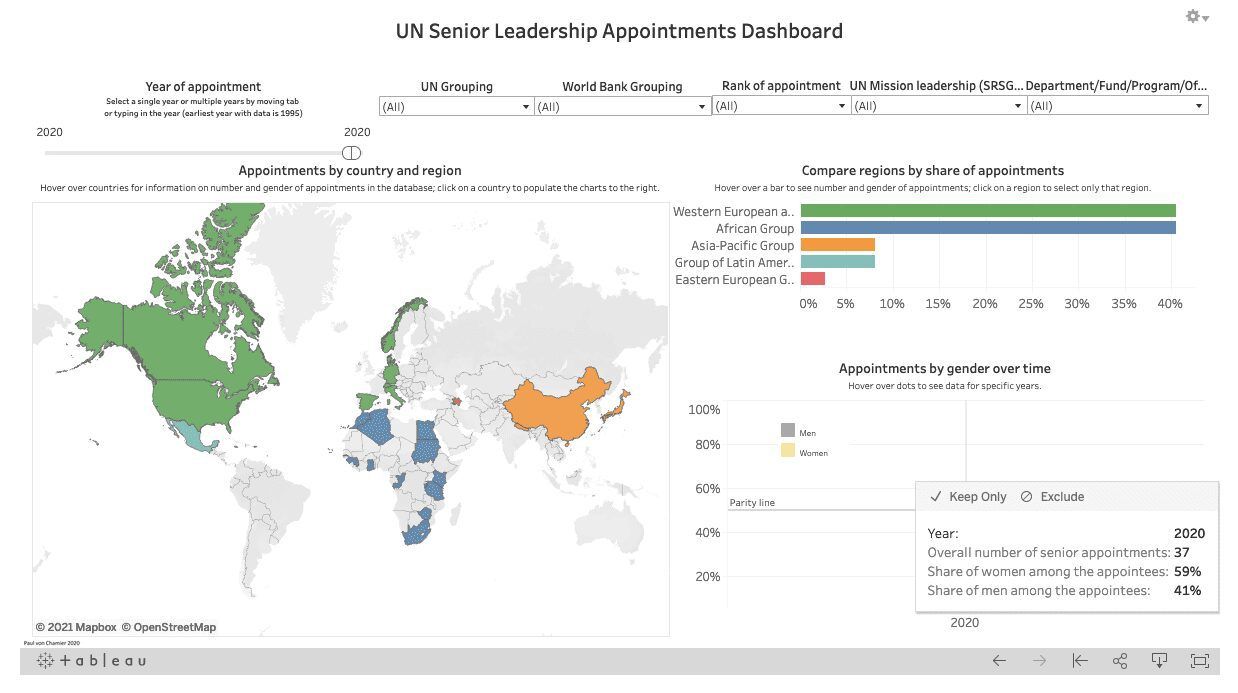
    UN Senior Appointments: Looking Back at 2020

    Last fall, with the launch of our UN Senior Leadership Appointments Dashboard, we were able to quantify the “halting progress” on gender parity at the UN. We are pleased to announce that we have updated the dashboard to include all the data from the year 2020—and that the progress continues. While this article highlights some of our key headlines from 2020, we encourage you to explore the updated dashboard and the varied analysis it offers.

    Paul Von Chamier
    Paul Von Chamier
  • Press Release October 22, 2020 Promoting and Defending Multilateralism

    Press Release: Launch of the UN Senior Leadership Appointments Dashboard

    The Center on International Cooperation and the Center for Global Affairs at NYU are launching an online dashboard aimed at tracking diversity at the leadership level for the United Nations. The new UN Senior Leadership Appointments Dashboard collates information issued as press releases by the UN about appointments of its most senior leaders since 1996, tracking various measures of diversity including gender, national origin, age, and educational background.

  • Blog June 22, 2020 Promoting and Defending Multilateralism

    Senior Appointments at the UN: Using Data for Greater Transparency

    The NYU Center on International Cooperation (CIC) and NYU Center for Global Affairs (CGA) have been working together since 2017 to independently monitor implementation of the strategy. As one piece of this work, we have focused on developing a richer understanding of UN senior appointments (assistant secretary-generals, undersecretary-generals, and deputy secretary-generals), including gender and other demographic dimensions. To do this, we have collected data from press releases on the UN’s website, allowing us to gain insights on the strategy’s progress and produce an interactive database on current and past patterns in senior appointments, which will be launched in September 2020.

    • Paul Von Chamier
    Paul von Chamier, Foteini Papagioti
  • Blog September 17, 2018 Prevention and Peacebuilding

    Time to Gender Parity: The Current Pace of UN Senior Appointments

    It’s no secret that the United Nations (UN) has a gender problem. Historically a bit of a boys’ club, the UN still has more men than women employed at most levels. Some progress has been made on hiring and appointing more women–particularly since Secretary-General António Guterres took the helm in January 2017–but there is still a significant gender gap at many ranks within the UN system.

    Ryan Rappa
  • Peace Operations Blog July 19, 2016 Prevention and Peacebuilding

    Global leadership needs a shot in the arm, starting with the next SG

    In July, the UN Security Council held its first, non-binding straw poll in the process of recommending the next Secretary-General.  In our polarized, confrontational political climate, the choice matters greatly. The leader of our sole truly global intergovernmental body must bring singular qualities to the task of being a brake and a buffer against forces pulling the world apart, bridging big-power divisions while supporting the excluded peoples of the world.

    Karin Landgren
    Karin Landgren

Stay Connected

Subscribe to our newsletter and receive regular updates on our latest events, analysis, and resources.

"*" indicates required fields

This field is for validation purposes and should be left unchanged.