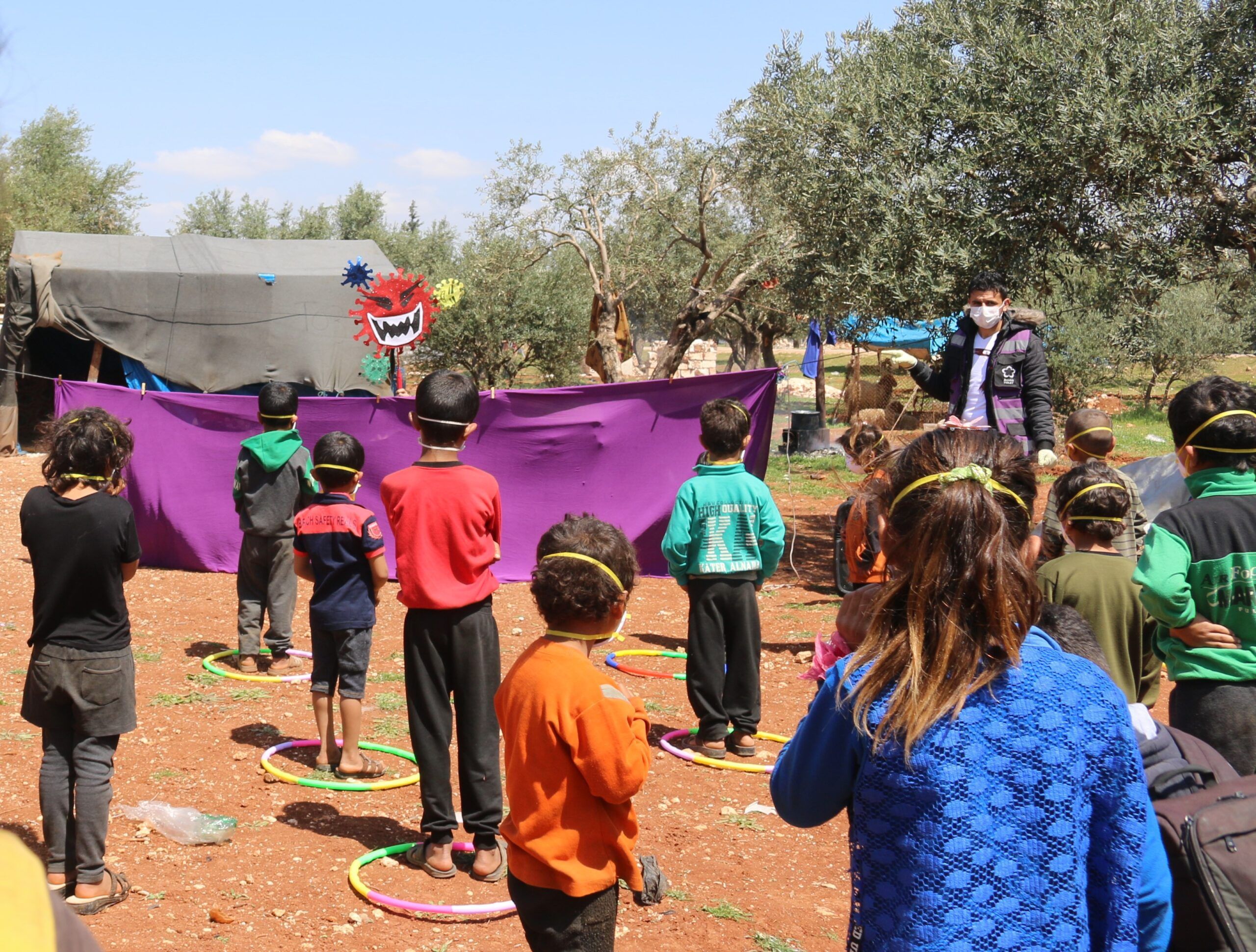
Landscape photo of Morocco.

Regional Focus: Middle East and Northern Africa

CIC’s MENA program has focused on providing supportive analysis on how to improve justice outcomes for victims and survivors in Syria.

Country-focus: Syria

With the appointment in 2017 of Hanny Megally, CIC’s lead for the Middle East and North Africa (MENA) program, to the UN Syria Commission of Inquiry (CoI), CIC’s MENA program has focused on providing supportive analysis on how to improve justice outcomes for victims and survivors in Syria. This work has included an ongoing partnership with the International Center for Transitional Justice (ICTJ).

Research and advocacy on Syria by CIC, ICTJ, and the CoI have focused on several issues—the impact of the pandemic; the humanitarian situation and aid modalities; the challenges of obtaining or renewing civil documentation; internment and repatriation of families of suspected ISIL fighter—and in particular the issue of the missing/disappeared in Syria.

Over 2021-22, the focus has been on the issue of the missing/disappeared through participation in consultations—many organized by the Families Associations supported by member states; meeting and advocating with key UN officials and diplomats; addressing the Third Committee of the General Assembly on the issue in October 2021 and publishing a policy paper with the CoI in June 2022.

Results have been as follows:

  • Advocacy was instrumental in the passage of an UNGA resolution in December 2021 that resulted in a study released by the UN secretary-general in August 2022. The study calls for the establishment of an international mechanism to assist in the search for the missing/disappeared in Syria. The CIC lead had been involved in several consultations, including at Glion in February 2022, informing the drafting of the study.
  • More recently, as a member of the CoI, the CIC lead has focused on efforts at the UN General Assembly to implement the recommendations of the secretary-general’s study, including by addressing the Third Committee, eliciting the support of the President of the General Assembly, and exploring with a number of key member states the process for establishing the mechanism. As part of this advocacy, several Op-Eds were also published in English, Arabic, Spanish, and German-based media such as Al Jazeera, The New Arab, Página 12, and Tagesspiegel.

Further Reading

  • Blog June 22, 2023 Regional Focus: Middle East and North Africa

    Conversation with Ahmad Helmi, Advocate for Syria's Disappeared: What's Next for the 130,000+ Disappeared? Any Hope for Syria's Families?

    At the end of this month, the United Nations General Assembly (UNGA) will convene to vote on whether an international institution should be established whose primary focus will be finding the tens of thousands of missing and disappeared in Syria. In this blog series, we host a number of conversations with Syrian human rights activists and advocates to spotlight why this international institution is urgently needed to address the impunity gap in Syria and to improve justice outcomes for Syrian victims and survivors. This is the first in the series.

    • Hanny Megally
    Hanny Megally, Ahmad Helmi
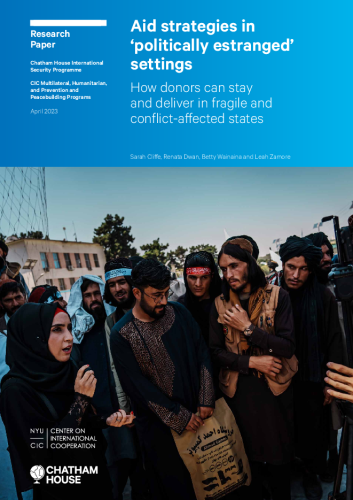
  • Aid strategies in ‘politically estranged’ settings report
    Publication: Report April 3, 2023 Humanitarian Crises

    Aid Strategies in ‘Politically Estranged’ Settings: How donors can stay and deliver in fragile and conflict-affected states

    NYU Center on International Cooperation and Chatham House publish a new study, which draws together diverse experiences of situations where relations between donors and national authorities are estranged, as well as examples from other relevant fragile settings, to show how donors and multilateral organizations can design and deliver some forms of development assistance to meet urgent needs, prevent further social and economic disruption and increase resilience, without legitimizing unlawful regimes or fueling further conflict, human rights abuses or large-scale corruption.

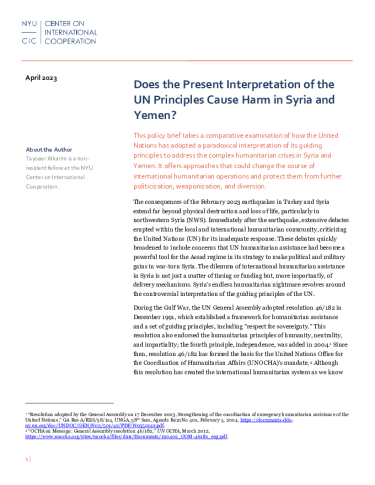
  • Publication: Policy Brief April 24, 2023

    Does the Present Interpretation of the UN Principles Cause Harm in Syria and Yemen?

    This policy brief takes a comparative examination of how the United Nations has adopted a paradoxical interpretation of its guiding principles to address the complex humanitarian crises in Syria and Yemen. It offers approaches that could change the course of international humanitarian operations and protect them from further politicization, weaponization, and diversion.

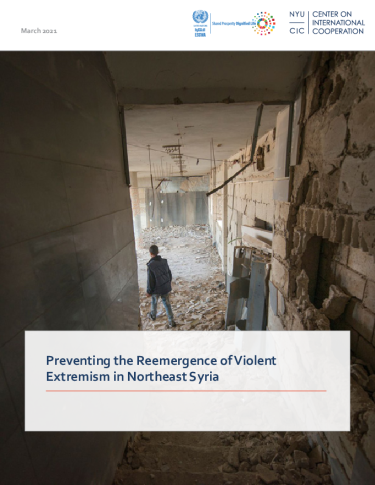
  • Publication: Report March 22, 2021

    Preventing the Reemergence of Violent Extremism in Northeast Syria

    Nearly two years after the Islamic State’s (IS) fighting forces were dislodged from their final hideout in Baghouz, Syria, the northeast (NE) region remains highly insecure. Numerous state actors with a stake in the future of Syria either maintain a troop presence in the NE or are providing financial and logistical support to proxies or other non-state actors. This joint report from the National Agenda for the Future of Syria Programme (NAFS) at UN ESCWA and the Center on International Cooperation (CIC) provides key policy recommendations and proposes a way forward for local and international actors seeking to preventing the reemergence of violent extremism in this region

  • Publication: Policy Brief June 8, 2020 Humanitarian Crises

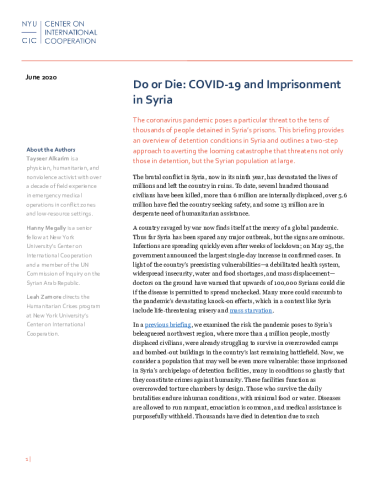
    Do or Die: COVID-19 and Imprisonment in Syria

    The COVID-19 pandemic poses a dire risk to the tens of thousands of people imprisoned in Syria’s archipelago of prisons and detention facilities, many in conditions so ghastly that they constitute crimes against humanity. These facilities function as overcrowded torture chambers by design. Thousands have already died in detention due to such circumstances, and those still living are especially vulnerable to the spread of coronavirus.

Stay Connected

Subscribe to our newsletter and receive regular updates on our latest events, analysis, and resources.

"*" indicates required fields

This field is for validation purposes and should be left unchanged.