Achieving truly durable peace demands participation from all segments of society. Whether one is seeking to better understand the geopolitical dynamics that lead two countries to war—or the factors driving violence in a large city—it is critical to gain input, perspectives, and solutions from across society.
Too often, critical discussions about peace are inaccessible to large portions of the population that could both contribute to and benefit from them. Conversations on peacebuilding may be physically off-limits, occurring in the heavily guarded conference rooms in world capitals, or functionally inaccessible, draped in the technical jargon of elite institutions.
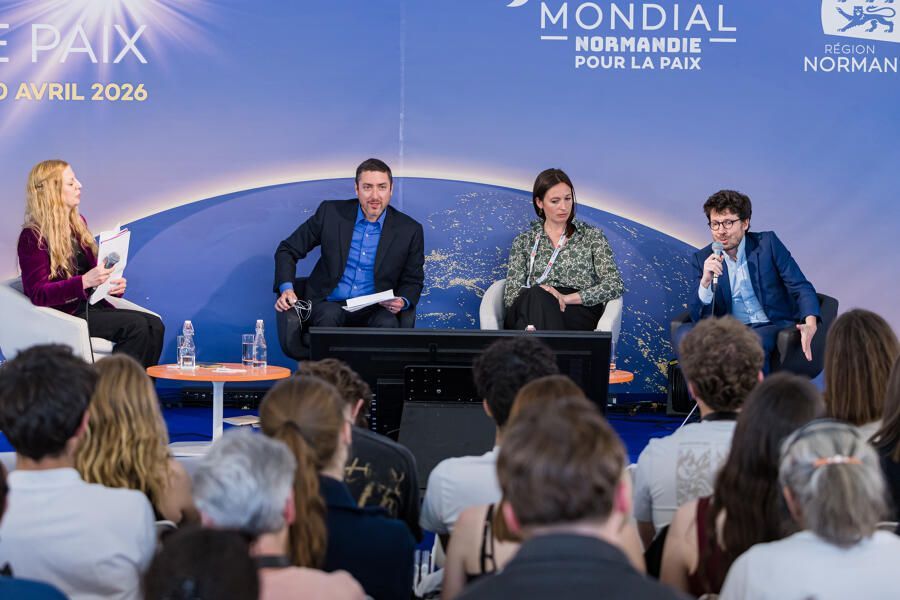
This poses a challenge to those seeking impactful, cross-sectoral discussions on peace and violence reduction. Finding a way to meaningfully bring in disparate voices is a crucial first step towards having more productive and innovative discussions on reducing violence in both policy and practice, as well as advancing the overall field of peacebuilding.* Last month in Normandy, France, thousands of people attended the Normandy for Peace World Forum, which modeled the type of broad-based discussions and cross-sector collaboration described.
For two days, a combination of senior government officials, elected lawmakers, nonprofit organization leaders and staff, United Nations (UN) representatives, private-sector executives, members of the media, and academic experts gathered in the city of Caen, France, to discuss a range of topics impacting global peace. Of note, the discussions also included nearly three thousand students, teachers, social media influencers, faith community congregants, artists, and members of the general public who shared a personal dedication to advancing peace and stopping violence.
The conference featured more than 30 different workshops, plenary speeches, panels, public discussions, art exhibitions, film screenings, and debates exploring different facets of peace. This included explorations of various geopolitical dynamics, like the future of transatlantic relations and East Asian security dynamics, debates on specific conflict contexts like Ukraine, the Middle East, and Iran, as well as explorations of overall trends impacting peace and stability, including both the threats and opportunities artificial intelligence (AI) and advanced technology pose in advancing peace, as well as the ongoing underrepresentation of women and youth in peacebuilding.
The presence of so many members of the public, particularly students, enlivened the discussions with unique perspectives and enthusiasm, as well as candid assessments of the challenges. For example, many of the students present shared examples of how youth have utilized technology to form international connections that enhance peacebuilding efforts, while also expressing frustration and disillusionment about being excluded from the policy discussions that most impact their futures, particularly at a time when they have immense concern about the overall trajectory of the world. Similarly, local residents from Normandy shared how, in spite of their personal dedication to advance peace and international solidarity, multilateral processes and national foreign policy debates frequently feel inaccessible, but that their engagement with their local churches and faith communities has established international bridges through which they can engage in cross-cultural discussions of peace and even support locally-led development efforts overseas.
The crucial nature of cross-sector and whole-of-society peacebuilding was similarly the focus of my remarks during the panel discussion on “Facing State Disengagement: What is the Future of International Solidarity” (Full video on YouTube). This panel highlighted the implications of budget cuts on international development, peace, and security. In the discussion, I underscored the importance of both civil society and local leaders in advancing peace and sustainable development and drew on examples from NYU’s Center on International Cooperation (CIC)’s experience partnering with city leaders to reduce urban violence through the Peace in Our Cities network, as well as working with grassroots peacebuilders to promote gender equality, advance sustainable development, and reduce armed violence through the Gender Equality Network for Small Arms Control (GENSAC).
Finally, I discussed the critical role of faith communities and the private sector in promoting—and in some cases financing—peacebuilding. This underscores that while cross-sectoral partnerships have always been important for advancing sustainable peace and development, the recent sharp cuts in development assistance by traditional government funders now make these partnerships essential. While noting the severe harms that could result from sharp cuts to assistance, I also noted that partners in the Global South stress that it is long overdue to rethink development assistance in a more equitable and balanced way that ensures greater participation across society and drives local leadership in peace and development. As the Forum itself demonstrated, there really is a role for everyone in these efforts.
In a time of immense challenges, declining aid, and overall pessimism pervading so many sectors of the multilateral field, the Normandy for Peace Forum served as a strong reminder that there are large and enthusiastic communities that have not given up hope for a more peaceful future—and that they play a crucial part in creating it. These communities are eager to engage and support peacebuilders working on the international stage and in national government. It is now incumbent on all of us to establish more creative and robust mechanisms that leverage this essential collaboration.
*This article refers to advancing overall discussions on peace and violence reduction. This includes the analysis of approaches, best practices, and political dynamics that impact violence. It is not a commentary on the processes of peace accord negotiations or context-specific peacebuilding activities, though these, too, must be cross-sectoral and ensure the inclusion of the voices of all those impacted by conflict and violence.