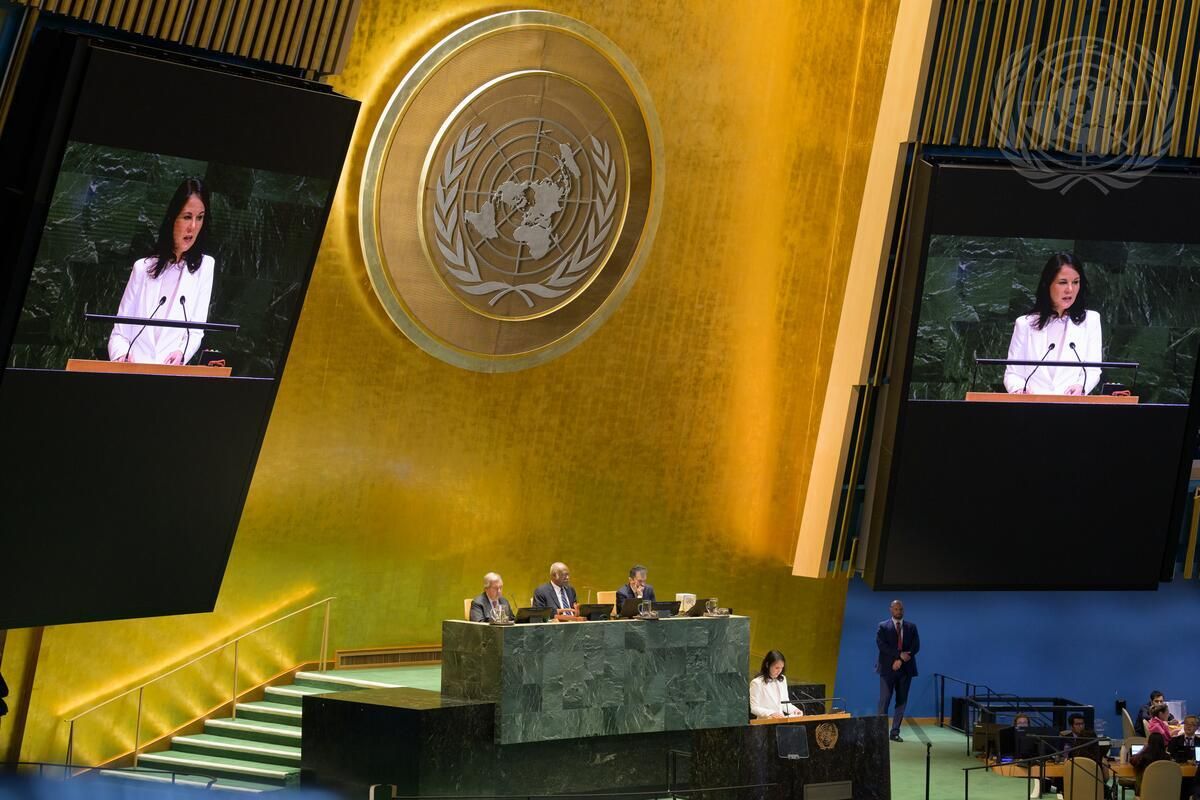
This policy brief explores “politically governed authority,” or real influence, constrained in form and scope by the preferences of the member states that constitute the institution. It proceeds through selection, function, capacity, and reform and uses the framework established in United Nations resolution 79/327, operative paragraph 49, to organize the implications of this design across four dimensions: efficiency, accountability, transparency, and institutional memory.
On June 2, 2026, the United Nations (UN) General Assembly will hold one of the rarest events in the organization’s institutional life: a contested election for the Presidency. Two candidates—Khalilur Rahman of Bangladesh and Andreas Kakouris of Cyprus—are competing for the Asia-Pacific slot. The contest is unusual not because it changes what the Presidency is, but because it briefly exposes what the office normally conceals: a political bargain between visibility and control that member states have maintained for decades.
The Presidency exercises real procedural authority: the office manages the Assembly’s schedule, leads its General Committee responsible for its agenda, interprets and applies the rules of procedure, appoints co-facilitators to lead intergovernmental negotiations, and organizes thematic debates. These functions determine what is prioritized and discussed, and whether negotiations move forward in a timely manner. Yet the office operates without stable resources, institutional continuity, or a clear mandate. This combination of flexibility and control is the result of deliberate choices by member states, who have constructed a Presidency that is useful enough to coordinate the Assembly’s work but insufficiently autonomous to become an independent political authority. The Presidency is shaped as a “politically governed authority.”
The reforms that have shaped the office over time confirm that member states are divided on whether to accept changes that would affect their control and increase the office’s autonomy, authority, and resources. For future reforms, the core choice is whether member states want a Presidency that merely manages the Assembly’s work each year, or one with enough continuity, capacity, and independence to help organize it over time and realize its full potential.