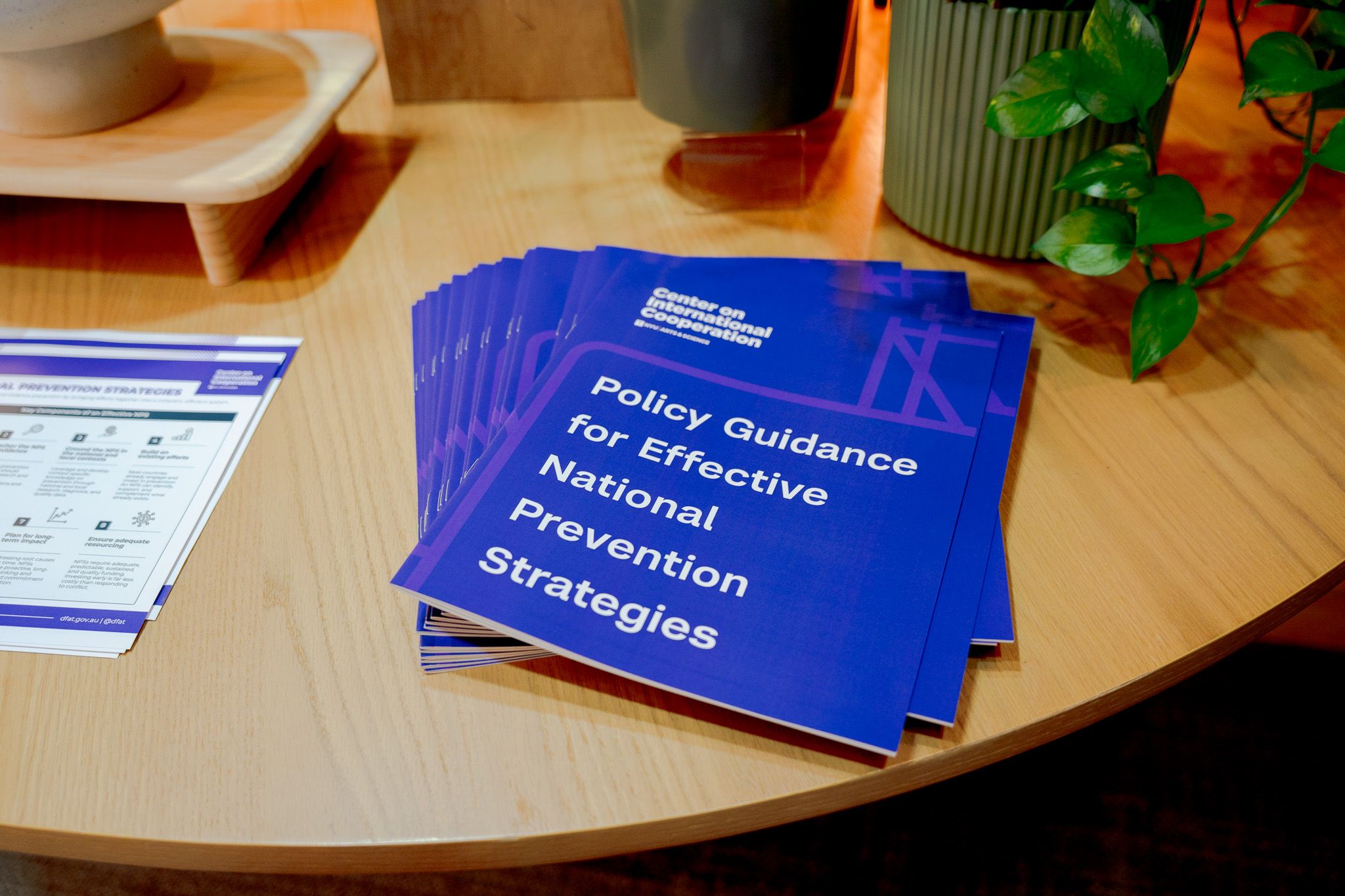
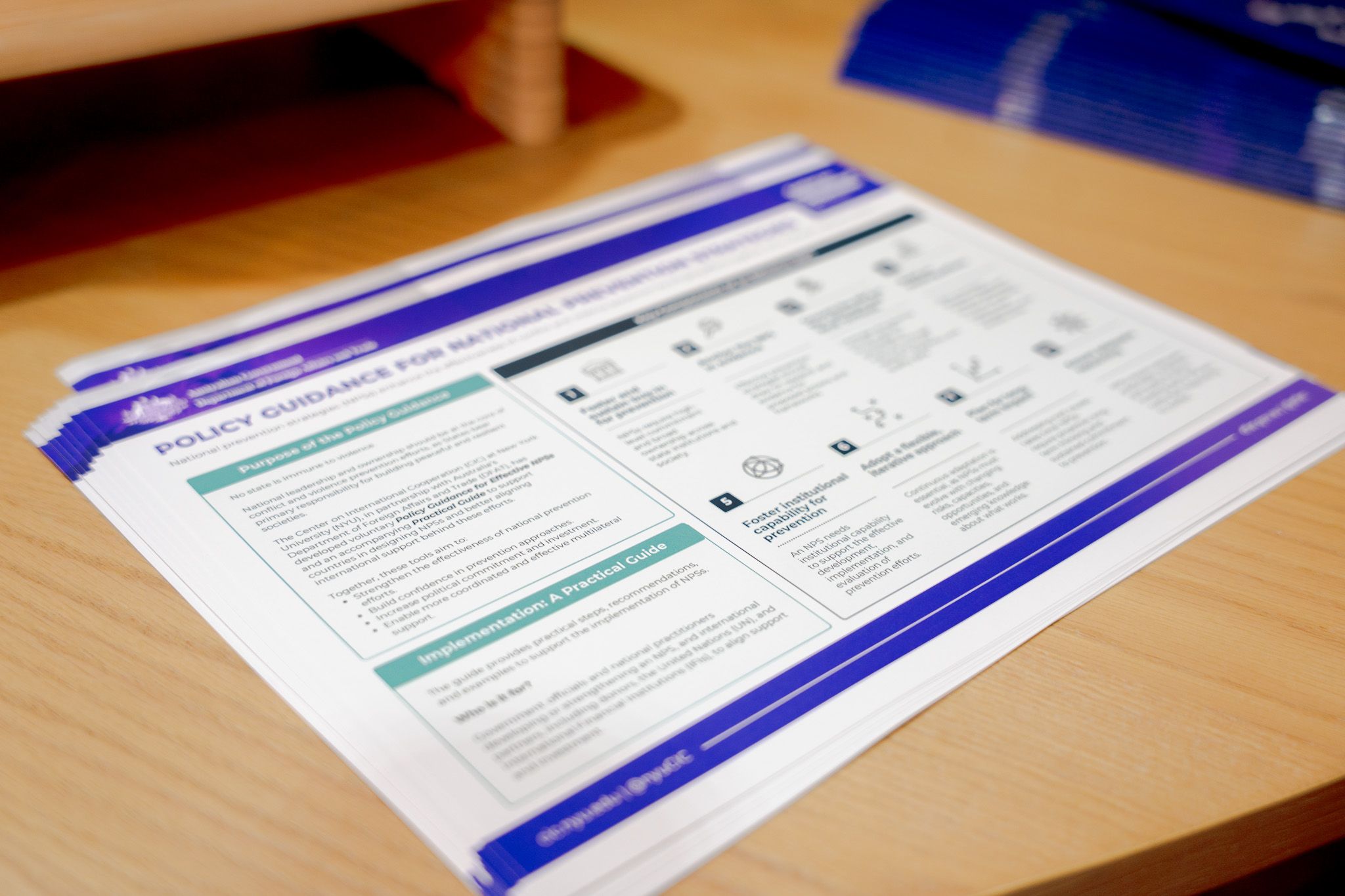
Against this backdrop, NYU’s Center on International Cooperation (CIC), in partnership with the Australian Government through the Department of Foreign Affairs and Trade (DFAT), has developed Policy Guidance for Effective National Prevention Strategies to support countries in designing NPSs and better aligning international support behind these efforts.
This tool aims to:
- Strengthen the effectiveness of national prevention efforts;
- Build confidence in prevention approaches;
- Increase political commitment and investment;
- Enable more coordinated and effective multilateral engagement.
An accompanying Practical Guide provides steps, recommendations, and examples to support the development of NPSs.
Who is this tool for?
- Government officials and national practitioners developing or strengthening an NPS; and
- International partners, including donors, the United Nations, and International Financial Institutions to align support and investment in such efforts.
Methodology
The findings presented in these tools draw on a desk review of cross-regional NPSs identified in 88 countries across the areas of violent conflict, violent extremism, and violent crime, as well as reviews of related evaluations. They are also anchored in broader research on violence and prevention. The research also draws on interviews and convenings with practitioners involved in the design, implementation, and evaluation of NPS worldwide, including with members of our Advisory Group on National Prevention Strategies: Prakash Bhattarai, Bernadette Black, Luis da Costa Ximenes, Mai Eleimat, Tarek Ghazel, Chris Ngwodo, Renzo Rosal, and Hawa Samai (see their bios below). In addition, it benefited from periodic exchanges with World Bank and UN colleagues, as well as consultations with civil society organizations and regional development banks. The findings and content were also presented to and discussed with a cross-regional group of Member States, including in bilateral settings, to gather further insights.