

The M23: A Fractious, Entrenched Rebellion
This policy brief aims to provide policymakers and members of the public with an understanding of the M23 movement’s internal dynamics, structure, and objectives, as well as its evolution over recent years.

					Array
(
    [thumbnail] => https://s42831.pcdn.co/wp-content/uploads/2023/12/Blog-Hero-Image-2-150x150.png
    [thumbnail-width] => 150
    [thumbnail-height] => 150
    [medium] => https://s42831.pcdn.co/wp-content/uploads/2023/12/Blog-Hero-Image-2-300x184.png
    [medium-width] => 300
    [medium-height] => 184
    [medium_large] => https://s42831.pcdn.co/wp-content/uploads/2023/12/Blog-Hero-Image-2-768x470.png
    [medium_large-width] => 768
    [medium_large-height] => 470
    [large] => https://s42831.pcdn.co/wp-content/uploads/2023/12/Blog-Hero-Image-2-1024x627.png
    [large-width] => 1024
    [large-height] => 627
    [1536x1536] => https://s42831.pcdn.co/wp-content/uploads/2023/12/Blog-Hero-Image-2.png
    [1536x1536-width] => 1418
    [1536x1536-height] => 868
    [2048x2048] => https://s42831.pcdn.co/wp-content/uploads/2023/12/Blog-Hero-Image-2.png
    [2048x2048-width] => 1418
    [2048x2048-height] => 868
    [gform-image-choice-sm] => https://s42831.pcdn.co/wp-content/uploads/2023/12/Blog-Hero-Image-2.png
    [gform-image-choice-sm-width] => 300
    [gform-image-choice-sm-height] => 184
    [gform-image-choice-md] => https://s42831.pcdn.co/wp-content/uploads/2023/12/Blog-Hero-Image-2.png
    [gform-image-choice-md-width] => 400
    [gform-image-choice-md-height] => 245
    [gform-image-choice-lg] => https://s42831.pcdn.co/wp-content/uploads/2023/12/Blog-Hero-Image-2.png
    [gform-image-choice-lg-width] => 600
    [gform-image-choice-lg-height] => 367
)
Today, the Congo Research Group at NYU’s Center on International Cooperation is publishing The M23: A Fractious, Entrenched Rebellion.
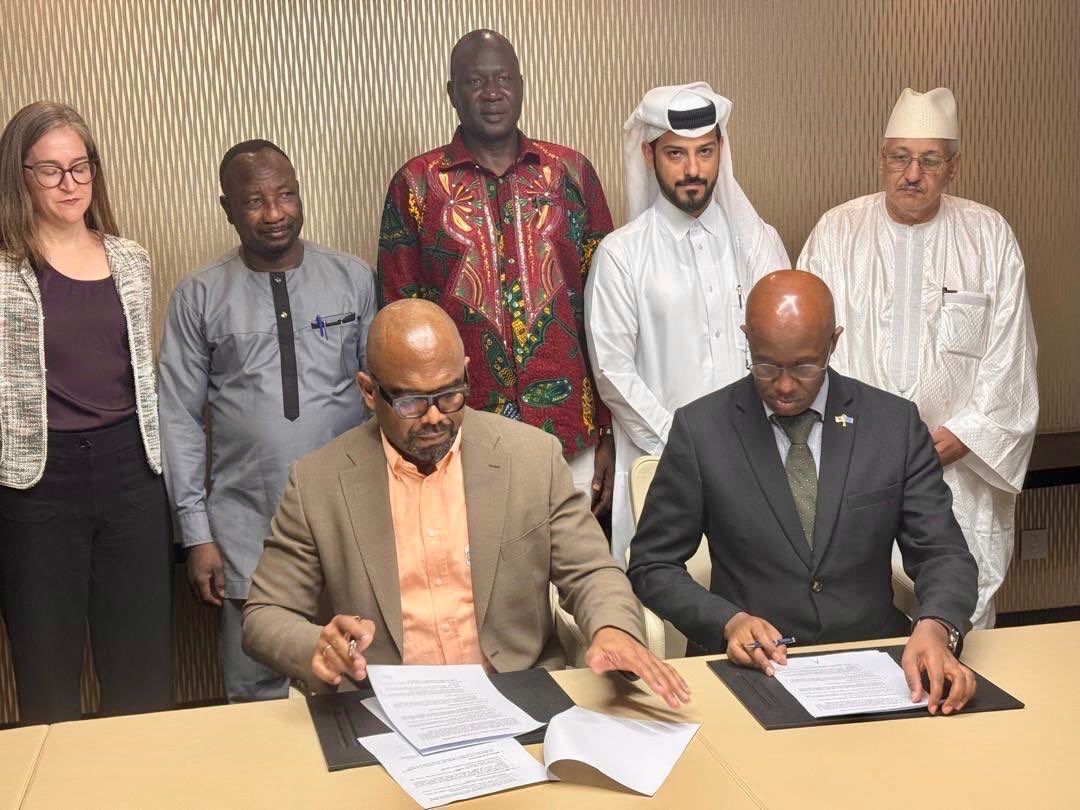
As talks between the Mouvement du 23 mars (M23) rebellion and the government of the Democratic Republic of the Congo (DRC) prepare to resume in Switzerland in mid-April, under the auspices of the state of Qatar, this new analysis provides policymakers and members of the public with an understanding of the M23’s internal dynamics, structure, and presumed objectives, as well as its evolution in recent years. It follows our October 2025 paper on the Qatar-led talks (the Doha process), which weighed a range of options for an agreement between the DRC and the M23.
After four years of fighting, a military solution to the conflict is unacceptable in humanitarian terms and unlikely on the battlefield. Below, we outline how internal dynamics within the M23 could shape political compromise.
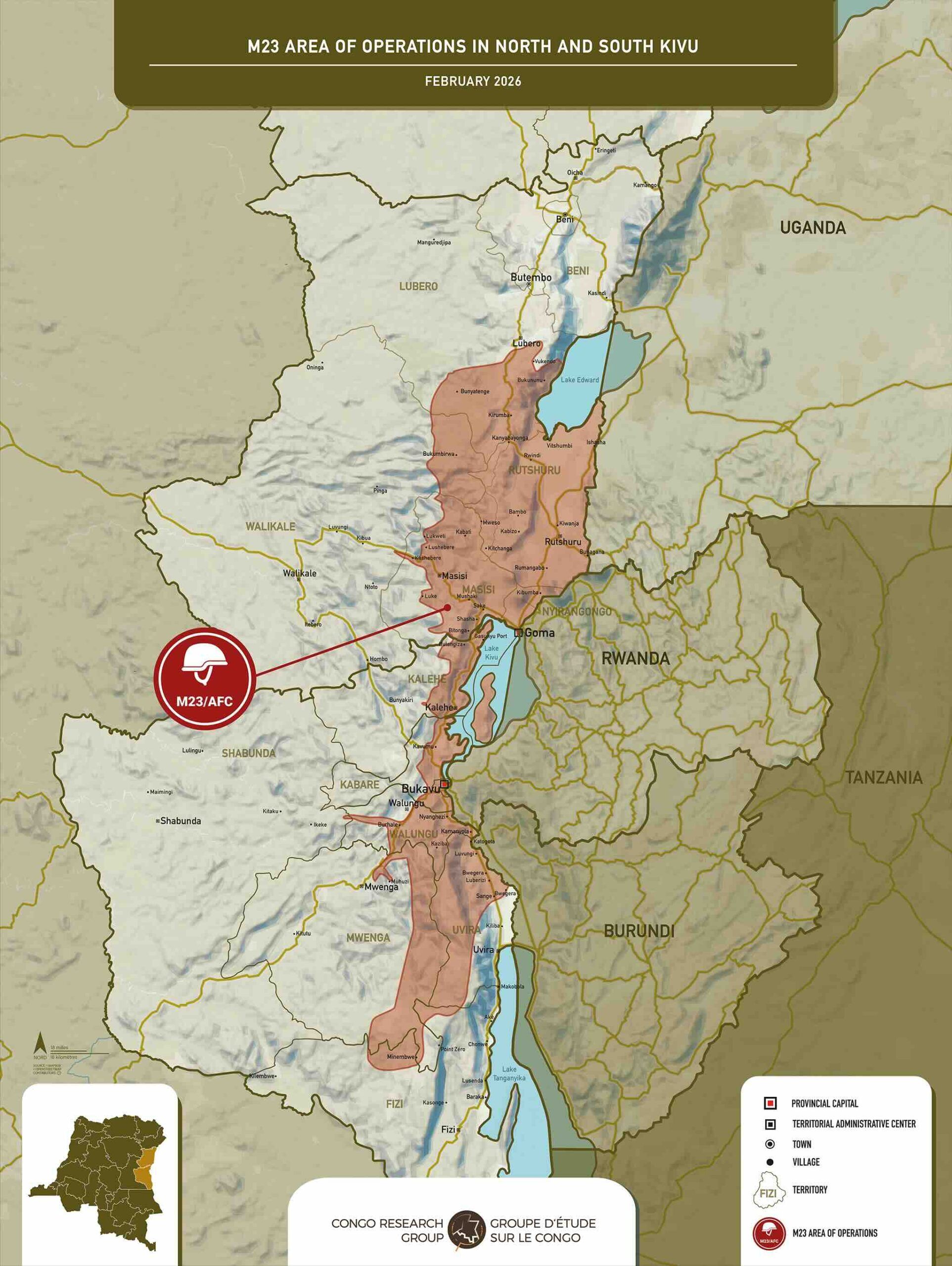
The M23 is engaging in a long-term occupation. This is what M23 fighters and leaders clearly state themselves. The facts also show this: Its efforts to build a parallel administration have been described by researchers, the Congolese government, and the UN Security Council. But its foundations are shaky—recruits, while numerous, have high desertion rates; administrators in key positions often lack experience; and Kinshasa has been able to exert pressure by denying M23-controlled zones access to the formal banking system.
Internal rifts within the M23 and with its partners are significant. There are several such divisions. Rwandan remains a strong backer of the M23 but Kigali and the M23 are not always on the same page. While key decisions are made with Rwandan approval, there are tensions between M23 leadership and its Rwandan backers that go back decades. Similarly, the M23’s objectives and those of its political umbrella, the Congo River Alliance (Alliance fleuve Congo, AFC), led by former Congolese electoral commission head Corneille Nangaa, diverge. While parts of the M23 appear interested in consolidating its control over North and South Kivu, Nangaa has publicly stated his aim to overthrow the government of President Félix Tshisekedi. And former president Joseph Kabila, a Nangaa ally who now spends some of his time in M23-controlled Goma, has called for an end to DRC president Félix Tshisekedi’s “dictatorship.” The M23 is also riven by internal tensions, between Makenga and another important military leader, Baudouin Ngaruye—the latter is seen as more reliably pro-Rwanda.
Therefore, the M23 represents many competing interests and objectives that will make it difficult—but not impossible—to find an agreement with the DRC government. A deal in Doha may not be in the interests of those in the AFC who seek to overthrow Tshisekedi. And many in the M23 leadership cannot see a future in a reunified DRC. Key, hence, to any peace deal will be an initial agreement between the DRC and Rwanda on what an acceptable end state to the conflict can look like—something that the US is uniquely positioned to facilitate. However, there is a risk this will fail without support and pressure from other stakeholders, such as the European Union, United Kingdom, and African Union, who have felt excluded from the process. The upcoming talks in Switzerland provide an opportunity to address the M23’s legitimate grievances—political prisoners, return of refugees—while tabling other issues (e.g., federalism) for a national process. The future of M23/AFC leadership and combatants—one of the thorniest issues, given their lack of political legitimacy—will likely require some kind of political and military integration of the rebellion.
Our full breakdown of the M23’s current situation can be downloaded here.
This policy brief aims to provide policymakers and members of the public with an understanding of the M23 movement’s internal dynamics, structure, and objectives, as well as its evolution over recent years.

This report argues that the main impetus for the March 23 Movement (M23) resurgence lies outside the Democratic Republic of the Congo (DRC).
Subscribe to our newsletter and receive regular updates on our latest events, analysis, and resources.
"*" indicates required fields