					Array
(
    [thumbnail] => https://s42831.pcdn.co/wp-content/uploads/2026/03/21906987993_cd967127ff_o-150x150.jpg.optimal.jpg
    [thumbnail-width] => 150
    [thumbnail-height] => 150
    [medium] => https://s42831.pcdn.co/wp-content/uploads/2026/03/21906987993_cd967127ff_o-300x200.jpg.optimal.jpg
    [medium-width] => 300
    [medium-height] => 200
    [medium_large] => https://s42831.pcdn.co/wp-content/uploads/2026/03/21906987993_cd967127ff_o-768x512.jpg.optimal.jpg
    [medium_large-width] => 768
    [medium_large-height] => 512
    [large] => https://s42831.pcdn.co/wp-content/uploads/2026/03/21906987993_cd967127ff_o-1024x683.jpg.optimal.jpg
    [large-width] => 1024
    [large-height] => 683
    [1536x1536] => https://s42831.pcdn.co/wp-content/uploads/2026/03/21906987993_cd967127ff_o-1536x1024.jpg.optimal.jpg
    [1536x1536-width] => 1536
    [1536x1536-height] => 1024
    [2048x2048] => https://s42831.pcdn.co/wp-content/uploads/2026/03/21906987993_cd967127ff_o-2048x1365.jpg.optimal.jpg
    [2048x2048-width] => 2048
    [2048x2048-height] => 1365
    [gform-image-choice-sm] => https://s42831.pcdn.co/wp-content/uploads/2026/03/21906987993_cd967127ff_o-scaled.jpg.optimal.jpg
    [gform-image-choice-sm-width] => 300
    [gform-image-choice-sm-height] => 200
    [gform-image-choice-md] => https://s42831.pcdn.co/wp-content/uploads/2026/03/21906987993_cd967127ff_o-scaled.jpg.optimal.jpg
    [gform-image-choice-md-width] => 400
    [gform-image-choice-md-height] => 267
    [gform-image-choice-lg] => https://s42831.pcdn.co/wp-content/uploads/2026/03/21906987993_cd967127ff_o-scaled.jpg.optimal.jpg
    [gform-image-choice-lg-width] => 600
    [gform-image-choice-lg-height] => 400
)
The UNGA Third Committee and the Challenge of Meaningful Impact

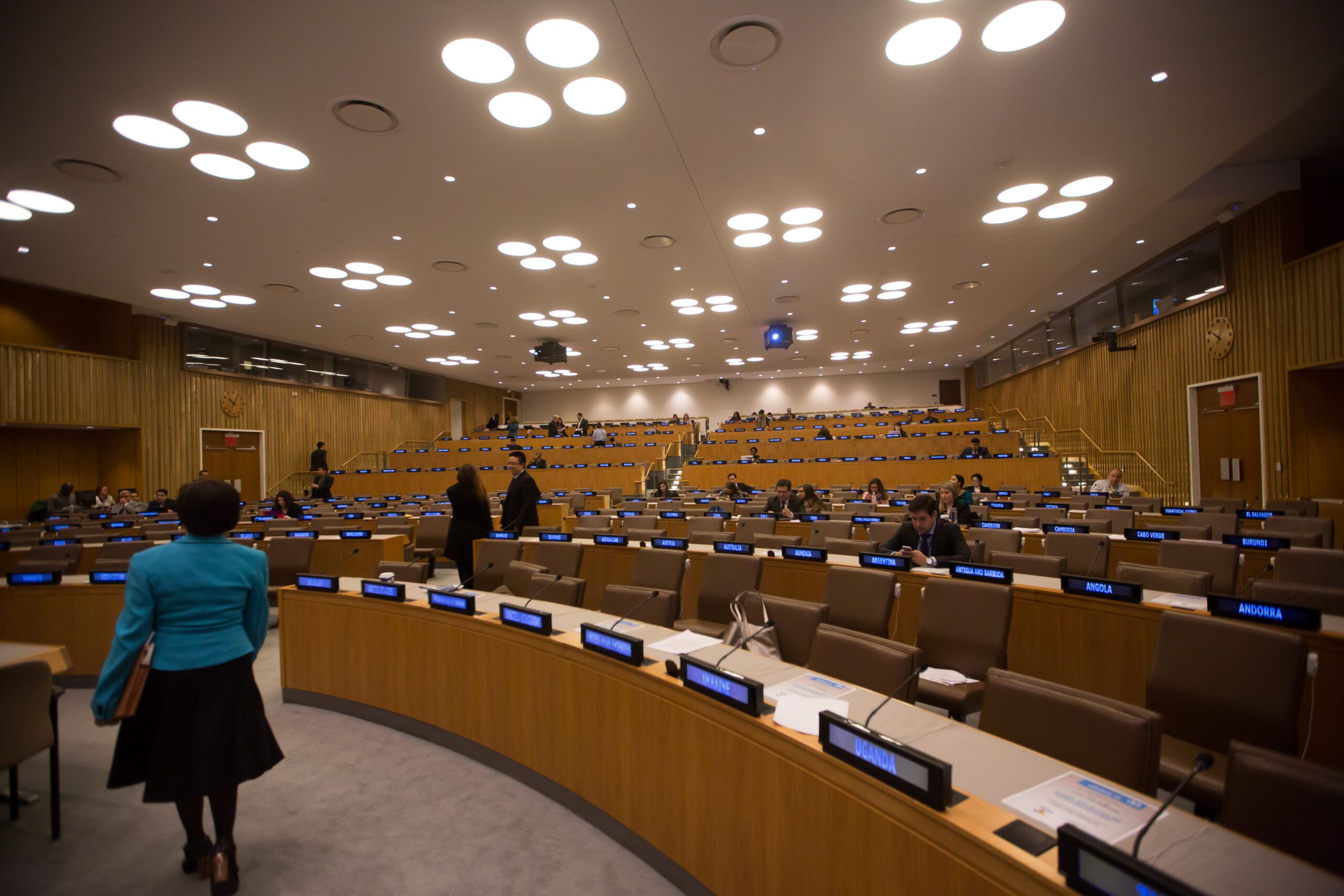
The Third Committee of the General Assembly takes a central place in the normative architecture of the United Nations (UN). Responsible for social, humanitarian, and human rights issues, it is the forum where governments negotiate resolutions addressing some of the most sensitive and politically contested questions in our societies. Its debates shape the interpretation and development of human rights and social norms, and its resolutions guide the work of the UN system and governments around the world. Yet as the number of resolutions and reporting requirements has steadily increased, a paradox has emerged: more activity does not necessarily translate into greater impact.
In February 2026, an informal meeting of the Third Committee brought together member states and civil society representatives to reflect on a seemingly (but deceptively) technical question: how to improve the Committee’s working methods. Developed over decades of practice, these methods have come under growing scrutiny. The volume of resolutions adopted and reports considered by the Committee has increased steadily, while expectations regarding implementation have also expanded.
This question has gained urgency amid broader reform efforts across the UN system. Discussions in the General Assembly’s revitalization process, the momentum generated by the Pact for the Future negotiations, and the Secretary-General’s UN80 Initiative have all brought renewed attention to the way member states do business and how mandates are created, implemented, and reviewed.
In this context, are the Committee’s current work practices really able to translate political ambition into real-world outcomes?
The answer to that question lies in a deeper structural dynamic. At a time of declining trust in multilateral institutions, the credibility of the UN depends not only on what member states agree to, but on whether those commitments are implemented and make a difference. That expectation does not rest solely on the Secretariat. It implicates the entire institutional chain through which mandates are created and carried out.
Yet the Third Committee often adopts resolutions without systematically accounting for how they will be operationalized. Commitments are crafted in New York, while their practical and financial consequences are left to be absorbed elsewhere in the UN system. Over time, this separation between mandate creation and implementation weakens prioritization and risks confining the Committee to political signaling. The debate on working methods is therefore not only about improving the efficiency of the Third Committee but also, and crucially, about safeguarding its authority.
The Workload Challenge vs. Routine Renewal
Anyone who has served in the Third Committee is familiar with the intensity of its annual session. Delegations often negotiate multiple resolutions simultaneously, while participating in interactive dialogues with Special Rapporteurs, independent experts, and other mandate holders.
Compared to other Main Committees of the General Assembly, where group dynamics often facilitate discussions and agreement, the wide diversity of issues addressed by the Third Committee tends to fragment delegations into multiple, overlapping, and sometimes contradictory positions. The result resembles more a mosaic of hundreds of individual national approaches than a coherent group-based negotiating dynamic.
The calendar is dense, negotiations can stretch late into the night, and the program of work expands year after year. Under sustained strain, diplomatic practice tends to revert to routine, narrowing the space for innovation. Yet this routine often conceals a form of inertia: it is often easier and politically safer to renew resolutions every year rather than to open substantive reassessment.
As a result, mandates are frequently extended but rarely reassessed or recalibrated; negotiated language accumulates over time; reporting requests multiply; new formulations are layered onto previous texts without systematically clarifying priorities or sequencing obligations. Over time, texts grow longer and increasingly complex.
For national-level implementers, this layering translates into a dense set of partially overlapping mandates and reporting requirements. Political priorities are harder to interpret, and execution is more difficult to manage. Over time, this dynamic creates a widening gap between the mandates adopted in New York and the capacity to implement them effectively.
Two Roles, Two Tracks: the Disconnect Between Norm-setting and Accountability
The Third Committee performs two distinct but interrelated functions within the UN system.
On the one hand, it serves as a normative forum. Through resolutions and declarations, member states collectively articulate and refine international standards in the fields of human rights, social policy, and humanitarian issues. The authority of these standards derives from the universality of the General Assembly itself: 193 member states debating and agreeing on sensitive matters in a single place.
On the other hand, the Committee also functions as an accountability platform. Through interactive dialogues, member states receive information on thematic issues and country situations. These exchanges allow governments to question experts, respond to findings, and discuss emerging challenges.
In principle, these two roles reinforce each other. Evidence generated through reporting and dialogue should inform the development of norms. In practice, however, they often operate as parallel (if not siloed) tracks: while the interactive dialogues produce a wealth of extensive analysis, evidence, and insights, those findings rarely shape the drafting of operative language or the negotiated outcomes of resolutions in a systematic way.
This disconnect eventually weakens both functions: normative texts risk becoming detached from empirical evidence and current trends and challenges, while accountability discussions lose some of their potential impact on policy development.
Reform Under Financial and Political Constraint
For more than two decades, member states have engaged in a process to strengthen the effectiveness of the General Assembly and its main committees. The Ad Hoc Working Group on the Revitalization of the Work of the General Assembly has served as the principal forum for these discussions. Recent resolutions adopted through this process include provisions requesting the Main Committees to review their working methods and submit concrete proposals to improve the efficiency and effectiveness of their work.
The revitalization agenda has traditionally focused on issues such as meeting scheduling, the President of the General Assembly’s role, and coordination between UN organs. Increasingly, however, attention has turned towards the working methods of the Main Committees and the plenary, and the lifecycle of mandates themselves.
Additionally, in December 2024, the General Assembly adopted resolution 79/192, which addresses specific aspects of the Third Committee procedures and encourages further reflection on how its work can be organized more effectively, including in coordination with the Human Rights Council in Geneva.
The timing of these discussions also coincides with a major system-wide reform effort known as the UN80 Initiative. Launched in 2025 as the organization approached its 80th anniversary, the initiative aims to strengthen the UN’s capacity to deliver results by improving efficiency, reviewing mandates, and exploring structural adjustments across the system. This reform is first and foremost a response to political constraints and financial pressure: rising expectations for measurable results despite persistent liquidity pressures have made mandate accumulation more visible and consequential.
One of the three workstreams of the UN80 initiative focuses specifically on mandate implementation review. Over decades, the General Assembly and other intergovernmental bodies have created thousands of mandates that define the activities of the UN Secretariat and other entities. Reviewing how these mandates interact, overlap, or accumulate is considered essential to improving the organization’s effectiveness.
For the Third Committee, this broader reform context creates an opportunity. It invites member states to reflect not only on procedural questions but also on the substance, structure, and effect of the mandates they create.
From Historical Records to Mandate Discipline
Many resolutions adopted in the Committee serve important political functions: they reaffirm principles, signal positions, and maintain consensus language on sensitive issues. These functions are common and often necessary in multilateral diplomacy.
At the same time, resolutions also generate mandates that guide the work of UN entities and influence national policy processes. When texts become excessively long or complex, layering historical records of previous negotiating cycles that are no longer articulated with current priorities, their operational meaning can become difficult to interpret.
Strengthening working methods, therefore, does not necessarily mean reducing the number of resolutions. Instead, it means ensuring that the Committee’s outputs communicate priorities clearly and support implementation effectively. The question is not how to produce less, but how to ensure that what is produced carries a clearer priority, coherence, and implementable direction. If the Third Committee wishes to preserve its normative authority in a context of increasing political and fiscal constraint, it must consciously align the rhythm of its negotiations with the lifecycle of the mandates it generates.
Three practical shifts follow from this logic:
1 – Signaling political priorities: Negotiators know which paragraphs were politically sensitive and which issues received particular attention during negotiations. Implementers, whether in national ministries or within the UN system, do not have easy access to this contextual knowledge. Improved drafting practices, clearer text structuring, and more concise language can help convey what matters most without altering substance.
2 – Space out review cycles: Many agenda items are renegotiated annually, even when the underlying issues evolve slowly. Introducing structured multi-year cycles, through mechanisms such as biennial or triennial revisions of themes or clustering related resolutions, could reduce repetition and free up time for implementation. Additionally, identifying thematic overlaps with other New York–based intergovernmental bodies that meet annually, such as the Commission on the Status of Women (CSW), could further alleviate the Committee’s workload.
3 – Connecting evidence and negotiation: Interactive dialogues with mandate holders generate substantial evidence and analysis. Creating a more deliberate bridge between these discussions and the negotiation of resolutions would ensure that empirical findings meaningfully inform normative decisions. One frequently discussed practical idea is scheduling some interactive dialogues during a resumed Committee session in the spring. Separating these discussions from the intensive negotiation period in the fall could allow delegations to engage more substantively with the evidence presented.
Institutionalizing the Lessons from Mandate Review
The ongoing work of the Informal Ad Hoc Working Group on Mandate Implementation Review, in the context of the UN80 initiative, offers four practical reference points for greater mandate discipline across the Third Committee’s activities.
First, mandates could be drafted with implementation in mind. This does not shift responsibility for implementation from the Secretariat to member states. Rather, it ensures that political agreements are articulated with sufficient clarity. Clear objectives, timelines, and responsible actors identified in the text of the resolution help ensure that political agreements translate into institutional action. That allows implementation to proceed without ambiguity or duplication. Greater precision at the drafting stage, therefore, protects ambition by anchoring commitments in structures capable of delivering them.
Second, reporting requirements could be consolidated across related resolutions to reduce duplication and administrative burdens. Many thematic areas generate parallel reports addressed to different intergovernmental bodies, often covering overlapping issues with similar timelines. Consolidation does not imply dilution, as it would make oversight more coherent and allow member states to assess implementation more comprehensively.
Third, earlier engagement between negotiators, implementers, and budget experts, particularly those working in the Fifth Committee, can help anticipate the practical implications of new mandates. Bringing feasibility considerations into the drafting phase strengthens the credibility of the agreed-upon mandates: it ensures that political commitments are designed with a realistic understanding of capacity, timelines, and resource constraints.
Fourth, periodic review of mandates should become a normal practice. Revisiting resolutions does not necessarily weaken commitments; on the contrary, it can strengthen their relevance and effectiveness.
Overall, strengthening mandate discipline is not about narrowing normative ambition or filtering priorities, but about ensuring that agreed standards remain credible and actionable.
The Authority-Feasibility Nexus: Protecting Credibility Through Delivery
Ultimately, by overproducing politically diluted mandates that cannot be implemented, the Third Committee risks undermining its own normative authority. Discussions about working methods are therefore not merely technical exercises but fundamental institutional choices about responsibility, prioritization, and delivery.
The authority of the Third Committee derives from its universality and from the moral weight of the issues it addresses. Its credibility, however, depends on whether the mandates it generates lead to meaningful outcomes.
In a world characterized by growing geopolitical divisions and skepticism towards multilateral institutions, credibility is a form of leverage. Ensuring that agreements translate beyond the negotiating room and lead to real improvements in people’s lives is essential for sustaining that leverage.
Strengthening working methods and mandate creation should not be seen, therefore, as administrative housekeeping. It is a structural safeguard to reinforce the connection between political agreement and institutional delivery.
As we look towards the future of the UN, the Third Committee finds itself at a crossroads. It can either continue as a factory for increasingly diluted resolutions or revert to a high-level forum for principled human rights and social development standard-setting.
Achieving it requires a deliberate move away from “business as usual.” Streamlining the workload and prioritizing mandates more deliberately would reconnect negotiation with implementation and reinforce the Committee’s normative authority.
In an era of political fragmentation and mistrust in multilateralism, this connection is central to restoring the UN’s credibility in human rights and social development.
# # #
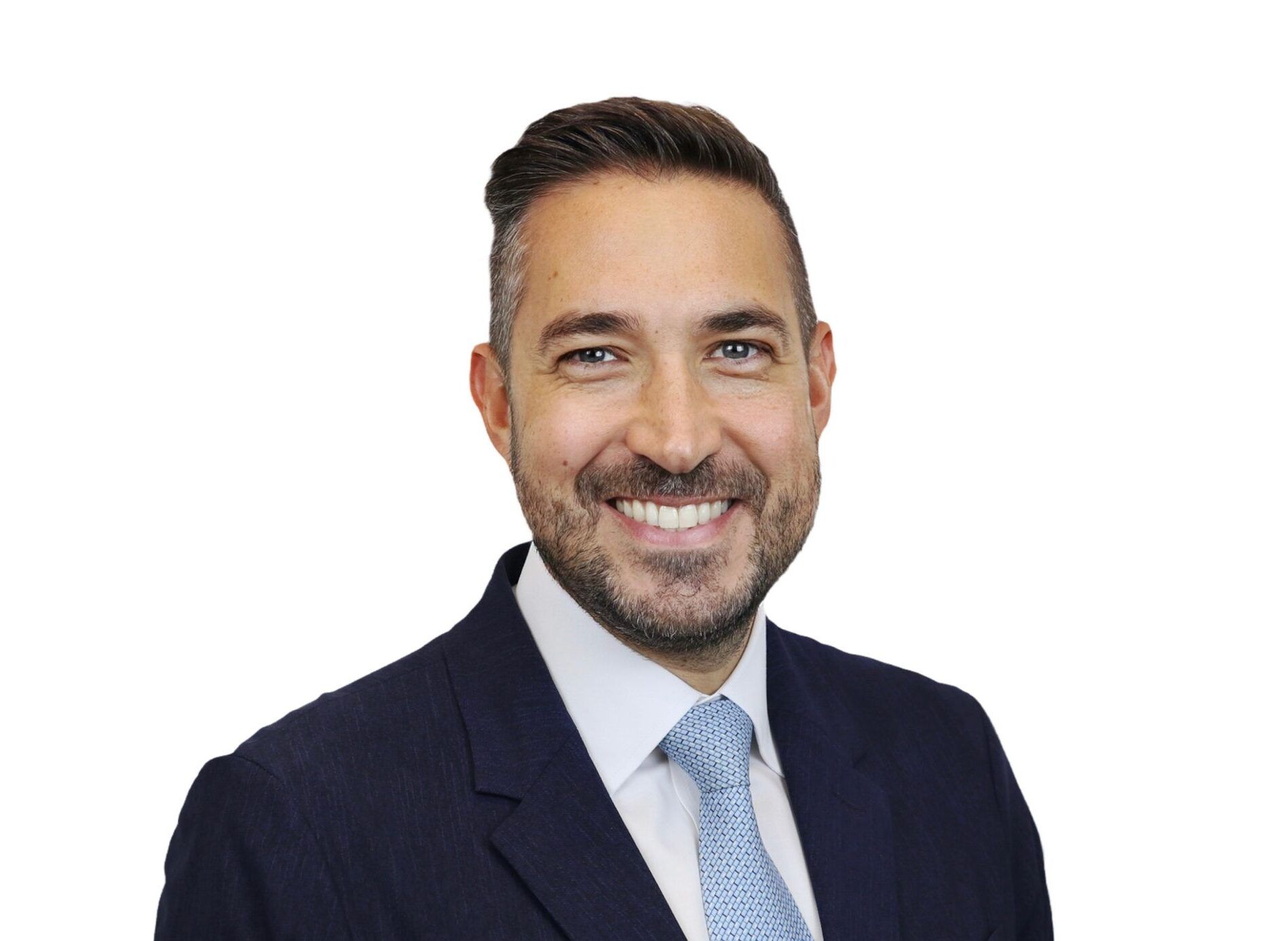
Fernando Marani, co-author of this piece and Program Director for Justice, Inclusion, and Equality with the Pathfinders for Peaceful, Just and Inclusive Societies at the Center on International Cooperation (CIC) at NYU, addressed Member States in February 2026 during the annual informal meeting of the Third Committee of the UN General Assembly with civil society, as one of only two civil society briefers invited to speak this year. In his intervention, he calls for stronger multilateral action that delivers real results on human rights, social development, and inclusion.
▶️ Watch the full intervention on our YouTube channel.
Stay Connected
Subscribe to our newsletter and receive regular updates on our latest events, analysis, and resources.
"*" indicates required fields