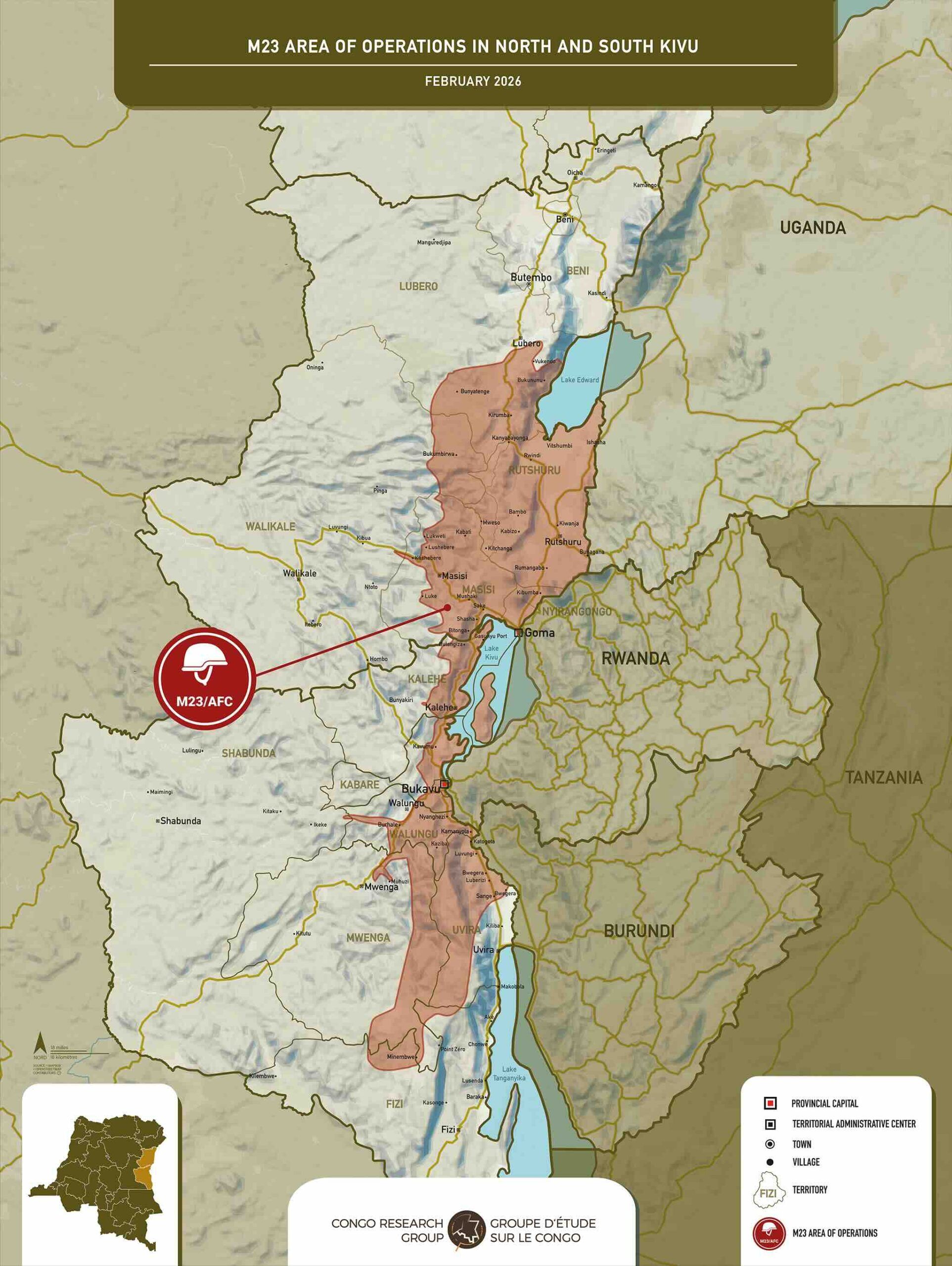
It has now been four years since the March 23rd Movement (Mouvement du 23 mars, M23) rebellion emerged, eventually seizing control over a large swath of North Kivu province in the Democratic Republic of the Congo (DRC).
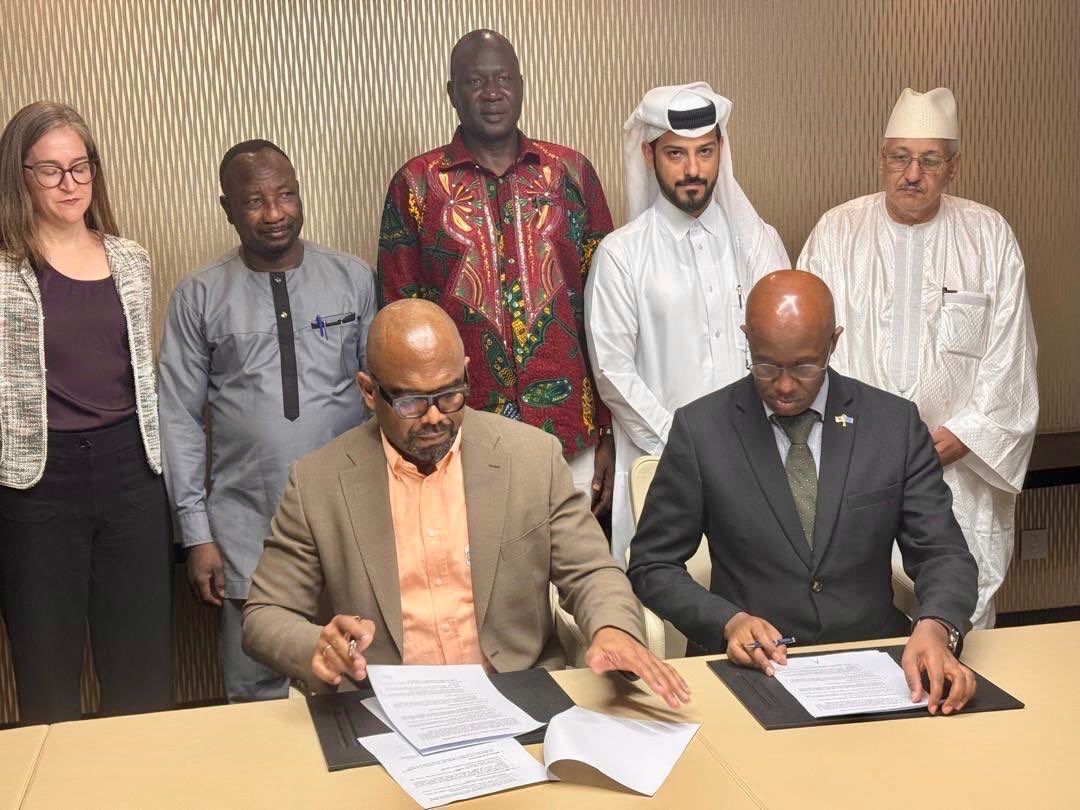
The armed group is currently engaged in stalled negotiations with the Congolese government led by the state of Qatar over a potential peace deal. At the same time, a new initiative for national political dialogue that could potentially address some of the M23’s demands regarding governance appears to be taking shape. Yet comparatively little about the M23’s internal organization and objectives is known to the public—Rwandan support to the M23, crucial though it may be, is perhaps the best-known feature of this rebel movement to the casual observer of Great Lakes geopolitics.
This policy brief seeks to fill in the gaps:
- The movement’s return to DRC.
- Its alliances with other armed groups and recruitment strategies.
- Internal tensions between the M23 and the Congo River Alliance (Alliance Fleuve Congo, AFC), the M23’s political umbrella created in late 2023.
This policy brief aims to provide policymakers and members of the public with an understanding of the movement’s internal dynamics, structure, and objectives, as well as its evolution over recent years.
The content herein is based on a combination of public sources, interviews with select key informants, and the Congo Research Group’s work in the region since 2014.
French
Cela fait maintenant quatre ans que la rébellion du Mouvement du 23 mars (M23) a émergé, prenant finalement le contrôle d’une grande partie des provinces du Nord-Kivu et du Sud-Kivu en République démocratique du Congo (RDC).
Le groupe armé est actuellement engagé dans des négociations bloquées avec le gouvernement congolais, menées par l’État du Qatar, en vue d’un éventuel accord de paix. En même temps, une nouvelle initiative de dialogue politique national, susceptible de répondre à certaines revendications du M23 en matière de gouvernance, semble prendre forme. Pourtant, le grand public en sait relativement peu sur l’organisation interne et les objectifs du M23 : le soutien rwandais au M23, aussi crucial soit-il, est peut-être l’aspect le plus connu de ce mouvement rebelle pour l’observateur occasionnel de la géopolitique de la région des Grands Lacs.
Cette note d’orientation politique vise à combler ces lacunes : nous y décrivons le retour du mouvement en RDC, ses alliances avec d’autres groupes armés et ses stratégies de recrutement, ainsi que les tensions internes entre le M23 et l’Alliance Fleuve Congo (AFC), la structure politique qui chapeaute le M23 et qui a été créée fin 2023. Notre objectif est de permettre aux décideurs politiques et au grand public de comprendre la dynamique interne, la structure et les objectifs du mouvement, ainsi que son évolution au cours des dernières années.
Le contenu du présent document s’appuie sur une combinaison de sources publiques, d’entretiens avec certains informateurs clés et de travaux menés par le Groupe d’étude sur le Congo (GEC) dans la région depuis 2014.