High-Level Week Is Over, Now the Real Work Begins
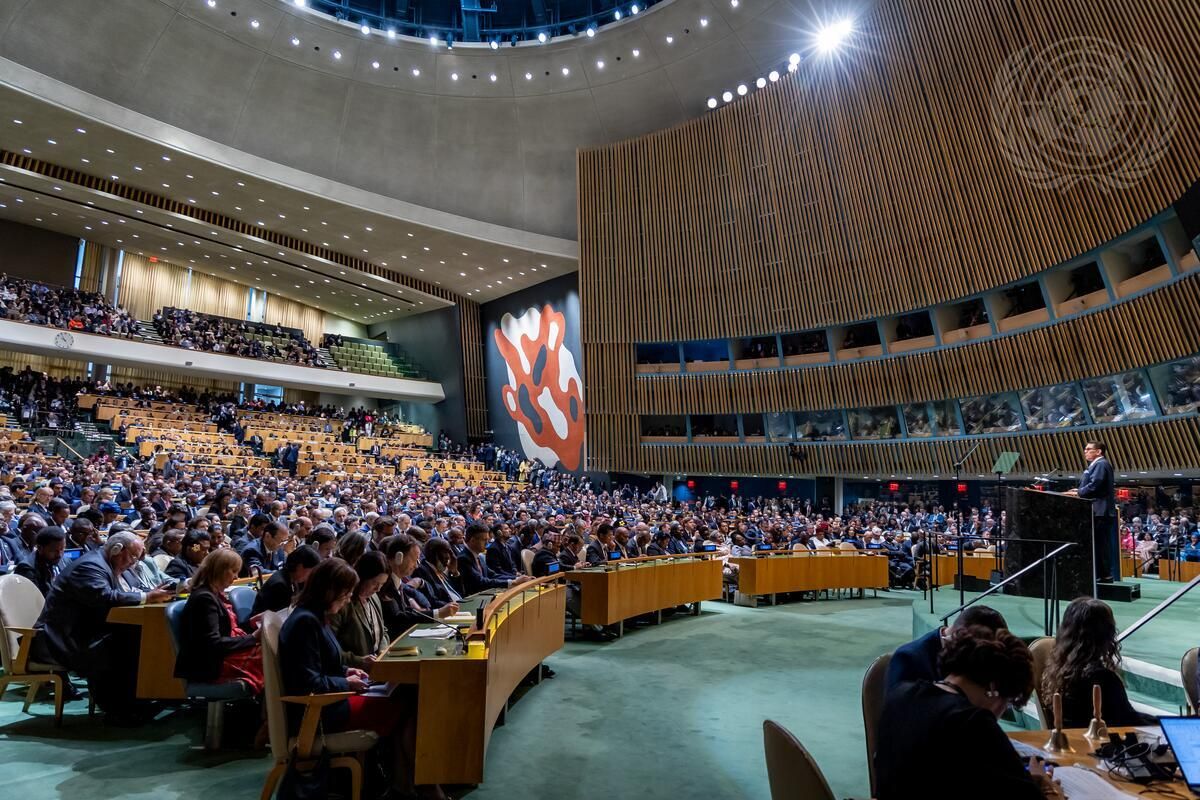
New York, October 1, 2026. With the craze of United Nations (UN) High-Level Week behind us, let’s shift our focus forward to what is going to be on the menu for the UN General Assembly (UNGA) in the coming months. The eighty-first session has now officially started: between now and September 7, 2027, member states will run six committees through a dense autumn, negotiate a budget under severe financial strain, decide whether UN80 becomes implementation or a filing exercise, prepare two 2027 milestones, and, above all, choose a Secretary-General. The new President of the General Assembly, H.E. Dr. Khalilur Rahman, will have to show what he intends to do with an office whose weight depends almost entirely on how its holder uses it.
The Secretary-General Race is the Spine of the Year
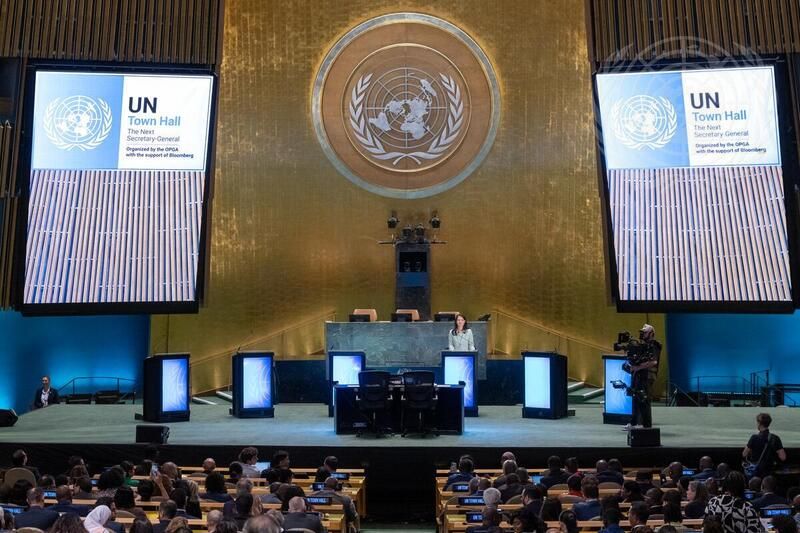
António Guterres’ second term ends on December 31, 2026; that leaves us with roughly three more months. And, the process for selecting the next Secretary-General arrives at UNGA81 more open than the calendar would suggest. In a communication dated September 4, 2026, the former President of the General Assembly, H.E. Annalena Baerbock, summarized the process to date: the joint letter of November 25, 2025; the nominations; the interactive dialogues; a global town hall on July 23, 2026—with the six candidates nominated by then—and two Security Council straw polls held during the 80th session. By the time of the fourth poll on September 29, eight candidates remain in the race and predictions run high.
Distinctively, the letter goes beyond the factual record of what resolution 79/327 requires and includes a set of political recommendations addressed to her successor. As she handed off the Presidency of the General Assembly, she noted calls from member states for the Security Council to recommend more than one candidate for the Assembly’s consideration, departing from the tradition inherited from Resolution 11(I) of 1946, and for a further interactive dialogue with whoever is recommended. She also recommended consulting on a possible intergovernmental process for a resolution on the appointment.
October Launches Committee Season
Most delegates in New York jump right from High-Level Week into the substantive work of the six Main Committees of the General Assembly.
The First Committee, chaired by H.E. Lok Bahadur Thapa of Nepal, returns to disarmament and international security: nuclear non-proliferation, conventional weapons, outer space, cyber. The files to watch are the Global Mechanism on information and communication technologies (ICT) security and more generally, the military dimension of artificial intelligence (AI)—which has been pressing into the Committee’s work without yet having a settled home there.
The Second Committee, chaired by H.E. Suela Janina of Albania, takes the economic and financial agenda at a difficult moment for development cooperation: macroeconomic policy, financing for development follow-up, debt, poverty eradication, countries in special situations. The approaching Sustainable Development Goal (SDG) Summit in 2027 and increasing divergence over the 2030 Agenda gives an unusually clear deadline to an agenda that often feels repetitive.
The Third Committee, chaired by H.E. James Martin Larsen of Australia, is where the Assembly covers human rights and social issues: special rapporteurs and treaty bodies appear before it, and member states negotiate on issues pertaining to refugees, women, children, racism and Indigenous peoples. It is also where the rights dimension of AI governance continues to arrive at.
The Fourth Committee, chaired by H.E. Coly Seck of Senegal, holds one of the broadest portfolios among its peers. Peacekeeping operations, special political missions, decolonization, information, outer space, and questions relating to the occupied Palestinian territories and UNRWA. With peace operations under both political and financial pressure, the gap between the missions mandates and the funds to deliver on them will be the subtext of most of its debates.
The Fifth Committee, chaired by H.E. Ibrahim Folorunsho Jimoh of Nigeria, has the session’s hardest task: the proposed programme budget for 2027, with heightened pressures for austerity and budget cuts despite an alarming financial situation. This area arrives after a genuine breakthrough where in June, the Committee ended the practice of returning funds never collected from member states. Since then, China paid the remainder of its contribution to the regular budget; while the USA paid an outstanding USD 850 million, though a very large balance remains outstanding.
The Sixth Committee, chaired by H.E. Trishala Simantini Persaud of Guyana, has moved past general discussion of codification into actual treaty machinery. The second session of the Preparatory Committee for the Conference of Plenipotentiaries on crimes against humanity is set for April 12 to 15, 2027, with the Conference itself meeting for three weeks in 2028 and again in 2029. This session’s resolution is largely procedural, which is exactly why it matters: procedural texts are where processes quietly keep or lose momentum. The Committee sits until November 20, with International Law Week on October 26 to 30, 2026.
Legal delegations have a second file this autumn, though it belongs in the plenary rather than the Committee. The International Court of Justice renews five of its fifteen seats every three years and on November 3, the Assembly and the Security Council will fill them for nine-year terms that run until 2036. The two bodies vote separately and simultaneously, with a candidate needing an absolute majority in both. The election will be contested: nine candidates are running for the five seats, including nationals of two permanent members, France and the United Kingdom, and one seeking a full term on a bench she joined last year.
UN80 Enters the Harder Phase
The Secretary-General told the Assembly this month that the UN80 Initiative has now moved to the design and implementation phase.
The mandate review is the test member states control. Resolution 80/251 set a timetable that runs straight through this session: mechanisms for collective review of mandate implementation across different bodies are to be considered by the Working Group by mid-December 2026, and the Secretary-General’s review of inactive, duplicative or fully implemented mandates by the end of March 2027. This is when the exercise will start to feel real for member states’ darlings.
The next Secretary-General will find UN80 partly executed, and will have to decide almost immediately which unfinished pieces to carry forward and what to add. UN80 was conceived as a response to a particular crisis of money and confidence. An organization facing challenges that change faster than its mandates needs something more durable than a reform initiative with a number attached to it. Above all, for any initiative to carry forward, coalitions supporting the next Secretary-General will matter even more than usual.
2027 Arrives Early, and Two Appointments Are Overdue
Two milestones formally fall near the end of the session, and both are being shaped now.
AI governance has never had more attention or higher expectations attached to it. The second Global Dialogue on AI Governance is fixed for May 3-4, 2027 in New York, on the margins of the seventh annual Multi-Stakeholder Forum on Science, Technology and Innovation for the SDGs (STI Forum), coinciding with the high-level review of the Global Digital Compact at the 82nd session. Geneva in July drew more than 4,200 registered participants from nearly 170 member states and featured the Scientific Panel’s preliminary report. Counting back from May 2027, the preparatory runway is short, and nothing can begin until the President of the General Assembly appoints co-facilitators, a major point of attention. It is the first concrete signal of whether the Dialogue becomes an institution with continuity between sessions or an annual event that restarts from zero each year.
The same applies to the SDG Summit in September 2027. Rahman’s own priorities describe the session as one that will be defined by the Summit and the 2027 Global Sustainable Development Report. For the 2023 Summit, co-facilitators for the political declaration were appointed on October 20, 2022, about six weeks into that session. If the Summit is the defining event, the appointment is the first test of whether the ambition comes with a process behind it.
…And Watch the President
H.E. Khalilur Rahman’s position is unusual: he was elected on June 2, as Bangladesh’s Foreign Minister, defeating Andreas Kakouris of Cyprus by 99 votes to 91. Asked afterwards whether he would step down from his domestic responsibilities, he said that resignation was not the only option. The UN’s own account of the opening described him as having left the ministry, although on September 10, two days after taking the chair, he answered a written parliamentary question as Foreign Minister, announcing that Bangladesh would convene a high-level event on the Rohingya crisis during the session. The presidency’s authority rests substantially on not being anyone’s national platform; how he manages that distinction over eleven months is among the most interesting topics about this presidency.
Watch the signals: where does he travel first, and in which capacity? Does he go to the 31st United Nations Climate Change Conference (COP31) in Antalya from November 9 to 20, under the Türkiye-Australia presidency arrangement? Does he maintain regular working contact with the Secretary-General, and does that survive January 1, 2027—when his counterpart becomes someone with no accumulated habits and a first hundred days to design?
For a week, leaders have taken turns at the UN lectern restating their attachment to multilateralism. The next eleven months will reveal what that attachment entails beyond rhetoric. Concretely, it means agreeing to retire mandates your own delegation once sponsored, when the review reaches that point in March 2027. It means paying assessed contributions on time so the budget adopted in December can actually be executed. And it means 193 states converging on one name for Secretary-General in an Assembly that, lately, has agreed on very little else. Each of these steps may look technical and unphotogenic, but together they are a better measure of the state of multilateralism than anything said from the podium this week, because the question underneath is whether the states that built this system still intend to defend it.
President of General Assembly Opens 81st Session of General Assembly Debate. September 22, 2026. © UN Photo/Laura Jarriel.

Related Resources
-
-
How Can the United Nations Escape Process Overload?
The next Secretary-General takes office on January 1, 2027, in a UN whose governance architecture has become so congested that it impairs the Organization's ability to act—a process overload.
-
Back to Basics: What the United Nations Cannot Afford to Lose
What are the "ABC" fundamentals of the United Nations (UN) organization? This new analysis unpacks agenda, boundaries, and capacity—the real “A, B, Cs” of any serious return to basics for the UN. Together, they distinguish between reform that clarifies the Organization's purpose and reform that erodes its ability to fulfill it.
-
-
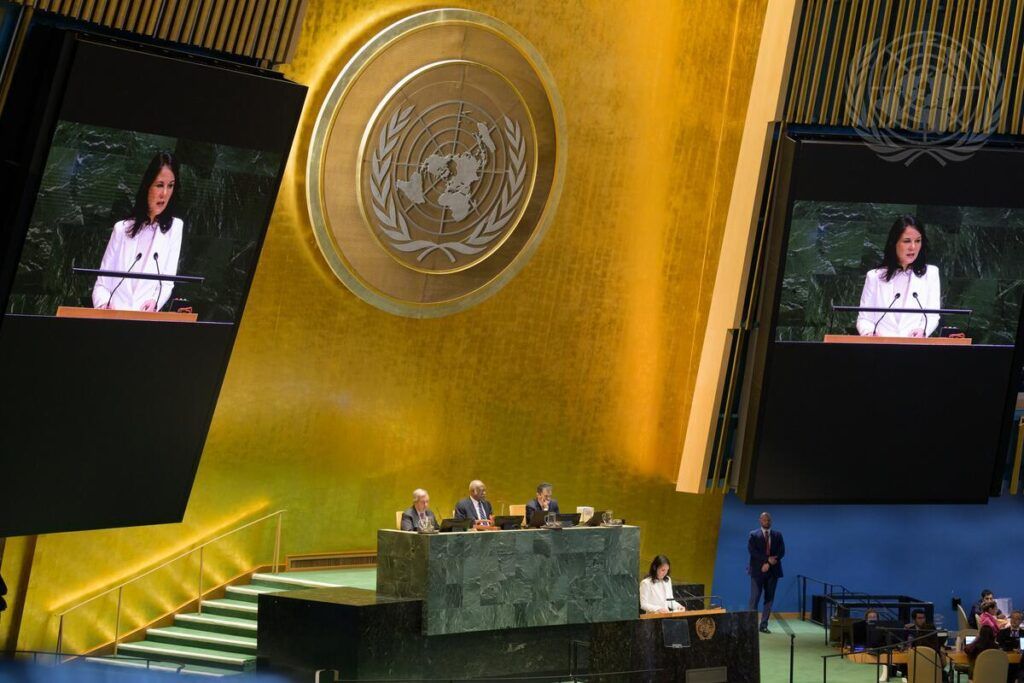
When the General Assembly Votes for its President
This policy brief explores “politically governed authority," or real influence, constrained in form and scope by the preferences of the member states that constitute the institution. It proceeds through selection, function, capacity, and reform and uses the framework established in United Nations resolution 79/327, operative paragraph 49, to organize the implications of this design across four dimensions: efficiency, accountability, transparency, and institutional memory.




Stay Connected
Subscribe to our newsletter and receive regular updates on our latest events, analysis, and resources.
"*" indicates required fields