Death By A Thousand Cuts: Austerity is No Substitute for Reform

Why Austerity Cannot Save the United Nations
Member states opened the selection of the next United Nations Secretary-General in April 2026 amid an escalating dispute over unpaid contributions to the United Nations (UN). Several observers had already noted that the UN80 reform initiative was operating, in practice, against the backdrop of accumulating arrears, even as the Secretary-General insisted that his reform agenda was forward-looking and not a response to financial pressure. That position is no longer tenable. The United States has now formally subordinated the release of more than four billion dollars in unpaid contributions to a series of conditions covering staff entitlements, senior posts, peacekeeping mission reductions, and restrictions on the discretionary fund inside the office of the Secretary-General. On April 30, Secretary-General António Guterres replied that assessed contributions are a treaty obligation and “non-negotiable” but now reform and arrears are explicitly linked, and the terms of that link will be inherited by the next Secretary-General.
Austerity now defines how reform is pursued in the United Nations: instead of finding consensus on priorities and goals, member states default to uniform budget cuts, which do not resolve the gap between the mandates they assign and the resources they allocate, thereby steadily eroding the institution’s capacity to act.
Austerity Avoids Political Responsibility
Member states are the authors of every UN mandate, the signatories of every assessed contribution, and the negotiators of every budget resolution. Because their attention concentrates on the adoption of mandates rather than their implementation, they tend to pay less attention to overlapping, underfunded, and internally inconsistent mandates. Presenting these issues as a problem of management allows member states to maintain ambitious mandates while transferring the cost of incoherence onto the institution.
Addressing these gaps comes at a cost: reprioritizing mandates requires intergovernmental consensus, and eliminating or substantially reducing a program opens a political negotiation in which every affected member state has standing to object. By contrast, cutting staff entitlements, eliminating posts, and reducing mission budgets offers an easier route: budget cuts can be distributed across the system and presented as a percentage reduction applied to all. The consensus rule therefore drives member states toward uniform cuts rather than strategic choices.
Incentives are set to reduce reform to a purely administrative exercise guided by the principle of the lowest (most palatable)-common-denominator. Functions with strong political visibility survive, while those less prominent succumb to “death by a thousand cuts.” Operationally essential functions (such as preventive diplomacy, mediation, peacebuilding) risk falling prey to the reform because they lack intergovernmental backing. Rather than a fiscal posture, austerity becomes a governance logic.
Budget Cuts Undermine Delivery and Reform
Like in national governments, budget cuts are never innocuous: they may look reversible, but they last far after being implemented, oftentimes with long lasting impact on the institutions. The growing mandate-resource gap weakens the institution’s effectiveness, while capacity takes time to rebuild once dismantled. Mediation illustrates the point: effective UN mediation rests on individuals who have spent years in specific conflict contexts, who know the parties, and who can navigate the gap between what actors state publicly and what they can accept; once specialized profiles are eliminated, the expertise they carried does not remain available for recall and the United Nations faces the next crisis with diminished capacities to prevent, resolve, or mitigate conflict. The same logic applies across high-skill, low-visibility functions, including field coordination, legal advisory, strategic planning, and oversight.
Fiscal discipline has merits: it brings about a culture of responsibility and a focus toward performance, efficiency, and accountability. But pursuing reform only through budget cuts is a failed strategy: austerity has proven to unleash a downward spiral that undermines rather than strengthens institutions. As the institution loses the capacity to deliver, member states see less return on their investment. Trust erodes alongside capacity, and once eroded, neither delivery nor trust is quickly restored. The less the United Nations can demonstrate, the less it is trusted to be given the means to demonstrate more. Only political direction and vision can bring about reform, which in turn can achieve budget reductions.
Conditionality Exploits Leverage but Defeats Reform
The structural condition has a strategic counterpart. Many of the United Nations’ core functions—including conflict prevention, humanitarian coordination, and peacekeeping support—generate benefits that extend to all states regardless of contribution. This creates a persistent incentive to free ride: states can draw on these functions without bearing a proportional share of the cost. Because the effects are diffused and the costs are delayed, no individual state faces pressure to act early.
This is the dynamic that conditionality exploits. The requirements attached to the release of arrears do not address the mandate-resource gap but, instead, reduce capacity within the same logic of uniform compression and require no decision about what the United Nations should do, only that it do less. A large contributor can convert arrears into negotiating capital because those contributions are themselves the source of the institution’s exposure. Because most of the membership, constrained by the consensus rule, cannot impose an alternative agenda at comparable speed, the institution is left to absorb the blow. Conditionality that demands cuts without requiring a political horizon cannot claim to be reform: it is a mechanism to push for and manage decline.
What the Next Secretary-General Should Do
The selection of the next Secretary-General creates a rare political moment to reset the terms of the debate. The Secretary-General does not control mandates or budgets, but the office carries political leverage: the capacity to name the dysfunction, frame the choices, and sustain the coalitions that will shape decision-making. These coalitions, formed by member states with the most direct stake in effective multilateralism, can (and should) be built during the selection process itself.
On the one hand, the next Secretary-General should publicly resist the application of uniform cuts to functions whose value is diffuse but operationally essential, including preventive diplomacy, mediation, peacebuilding support, oversight, and field coordination. Across-the-board reductions to these capacities are not a fiscal adjustment. They are a transfer of long-term cost into short-term savings. The proposed ten percent reduction in long-running peacekeeping missions is the immediate test case: it cannot be absorbed without identifying which preventive functions are being given up, and at what downstream cost.
On the other hand, the next Secretary-General should establish, as a condition of any further reform package, the publication of an authoritative mandate-resource gap analysis. The institutional channels exist: annual reports to the General Assembly, the program budget narrative, and public articulation of the gap by mandate. Member states cannot continue to assign objectives they will not finance and then criticize the institution for failing to meet them. Where mandates are persistently underfunded, sunset clauses should follow. The principle is straightforward: a mandate without resources is not a mandate, it is a slogan.
The real test of reform is not whether the United Nations can be made cheaper, but whether member states are willing to invest in the capacities that make collective action possible. A reform agenda that imposes cuts without a vision will only produce a smaller and weaker institution, not a more effective one. The next Secretary-General should push back against that logic or be forced to manage the decline of the United Nations.

Additional Resources on UN80 Reform
-
-
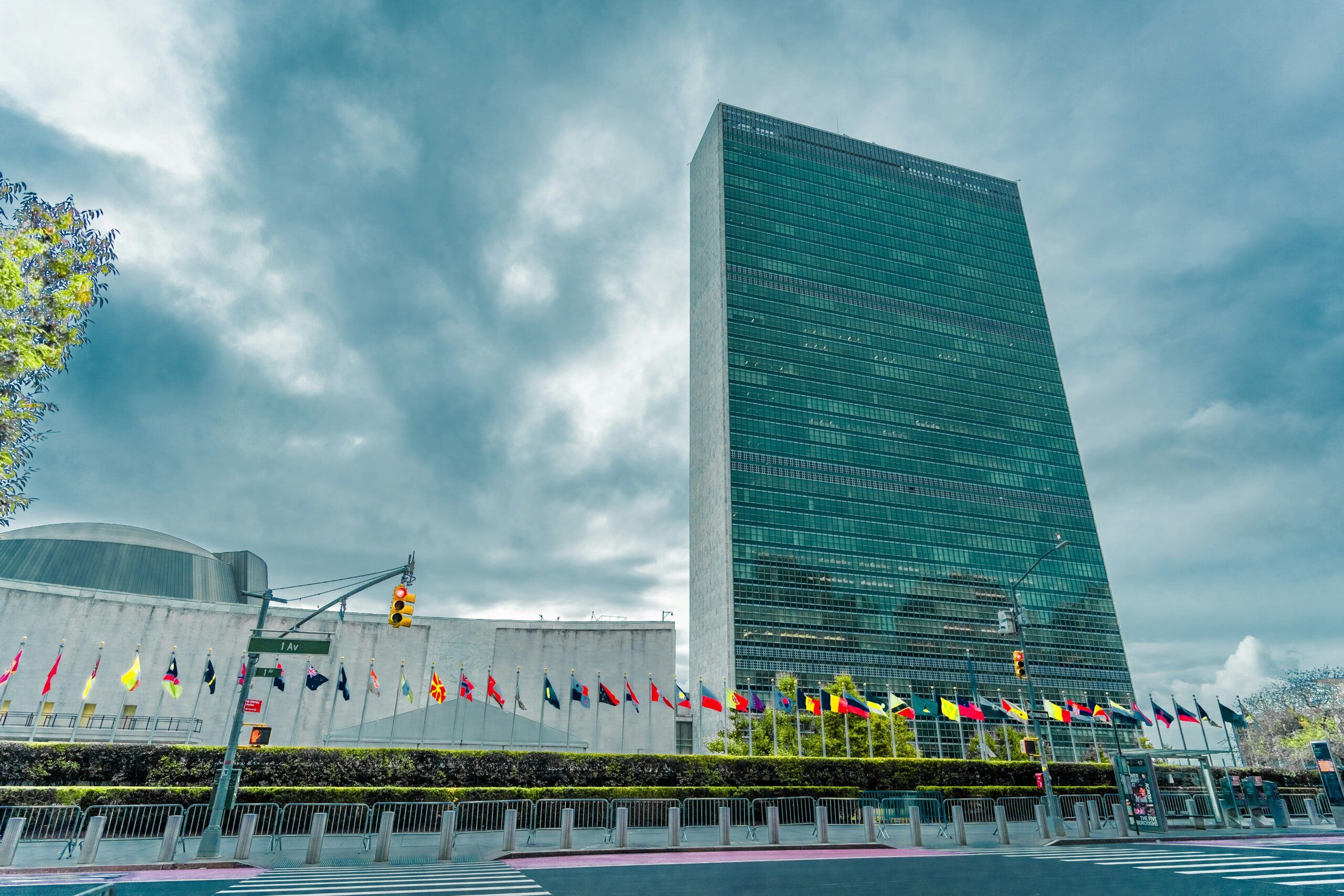
The UN80 Solvency Imperative: Successful Reforms Need Clean Finances First
Before the UN can reimagine its architecture for the future, it must restore the fiscal foundation on which that architecture rests.
Thibault Camelli
-
Adapting UN Mediation for Emerging Challenges and Security Threats
This paper acknowledges that UN mediation operates within an international mediation architecture and that the role of other mediation actors is equally critical.
Stay Connected
Subscribe to our newsletter and receive regular updates on our latest events, analysis, and resources.
"*" indicates required fields