Why Africa’s Debt Crisis Is a Question of Rights
The African Union (AU)’s Harare Declaration on the Dialogue on Debt Sustainability and Reform (Declaration), adopted in Zimbabwe in July 2026, marks an important political milestone in confronting Africa’s deepening debt crisis. By reaffirming the urgency of operationalizing the Common African Position on Debt, the Declaration pushes forward a coordinated continental agenda to improve African collective action, expanding liquidity, reforming the G20 Common Framework, reducing borrowing costs, and establishing new institutions such as the African Debt Monitoring Mechanism, the Borrowers’ Platform, and the AU Directors of Debt Management Offices Network.
This momentum is both timely and necessary. Across the continent, governments are diverting scarce public resources away from development and into rising debt service obligations. The Declaration itself acknowledges that escalating repayment pressures are eroding fiscal space for infrastructure, health, education, climate resilience, and other pillars essential to achieving Agenda 2063. In other words, Africa’s long‑term vision for inclusive and sustainable development is being undermined by immediate debt pressures, making bold, collective reform not just helpful but necessary.
A Lack of Focus on Human Rights
However, what is most striking is what remains underdeveloped. While the statement refers to sustainable development, fiscal space, transparency and accountability, it does not fully acknowledge debt as a human rights issue or place citizens—especially the most vulnerable groups—at the center of its continental debt policy roadmap. The Declaration’s largely institutional and technical framing is important, but giving limited attention to the human cost of debt on the African citizens, risks repeating earlier debt crisis cycles in which debt sustainability was treated mainly as a question of repayment capacity and market confidence—rather than as a question of whether states can meet their obligations to protect the dignity, livelihoods, and basic rights of their citizens.
The Current Blueprint
The limited attention to human rights is worth noting when considered against the growing body of work by the United Nations (UN) African and diaspora research institutions, social movements, civil society and the media which has exposed the human cost of debt in African countries. The Office of the United Nations High Commissioner for Human Rights (OHCHR) recently warned that the global debt is one of the economic decisions that are threatening development progress and can undermine states’ human rights obligations, especially where high debt servicing and austerity reduce spending on health, education and social protection. OHCHR has specifically called for debt sustainability assessments to be reformed so that they meaningfully include human rights and social spending considerations; while the UN Independent Expert on foreign debt and human rights has argued that debt-related economic reforms should be subject to human rights impact assessments before, during, and after implementation.
The UN Human Rights Council’s Guiding Principles on Foreign Debt and Human Rights, developed by the Independent Expert on the effects of foreign debt, make clear that compliance with debt repayment and economic reform commitments must not undermine the realization of fundamental economic, social, and cultural rights. The later UN Guiding Principles on Human Rights Impact Assessments of Economic Reforms similarly argue that economic reforms should be assessed before, during, and after implementation to ensure that they promote, rather than hinder, the enjoyment of human rights. These standards are relevant to African debt dialogues because they encourage creditors, international financial institutions, and states to treat fiscal adjustment not only as a technical exercise, but also as a process that must be attentive to rights, participation, equality, and accountability.
The 2025 Jubilee report: A Blueprint for Tackling the Debt and Development Crises and Creating the Financial Foundations for a Sustainable People-Centred Global Economy, posits that the real default in most indebted countries is not only financial default to creditors, but social and developmental default to citizens, the environment, and the future. This is especially the case as governments continue to sacrifice investment in education, health care, infrastructure, and climate resilience in order to service debt. The organization Debt Justice (formerly known as the Jubilee Debt Campaign), has similarly framed its work around putting human life before debt.
The Stop the Bleeding Campaign, led by the African Forum and Network on Debt and Development, further shows how African civil society has organized to draw attention to the human cost of debt. The campaign is a broad citizen movement involving civil society organizations, trade unions, women’s rights activists and youth activists, and it connects Africa’s debt crisis to illicit financial flows, lost public resources and the weakening of the social contract. Its core message is that Africa is losing resources that should be invested in people, and that debt repayments, illegitimate debts, and resources lost to tax havens and secrecy jurisdictions are part of the same political economy of extraction. By calling for citizen action, political mobilization, media engagement and people-based coalitions, the campaign challenges the idea that debt policy should be left to finance ministries, creditors and technical experts alone. It reinforces the point that citizens should not be passive recipients of debt decisions but should be included in shaping the continent’s debt agenda because the consequences are felt in public services, livelihoods, democratic accountability and dignity.
Taken together, these studies and campaigns show that broader debt reform debates increasingly recognize the human cost of debt. The Declaration could build on this momentum by explicitly integrating human rights language into its continental debt policy roadmap. It should recognize that people affected by debt crises are not passive beneficiaries of better debt management, but rights-holders whose experiences and demands must shape debt policy. Without that shift, even progressive continental mechanisms risk becoming tools for managing debt more efficiently rather than transforming an unjust debt system that continues to produce economic and social harm and widen inequalities among African citizens and countries.

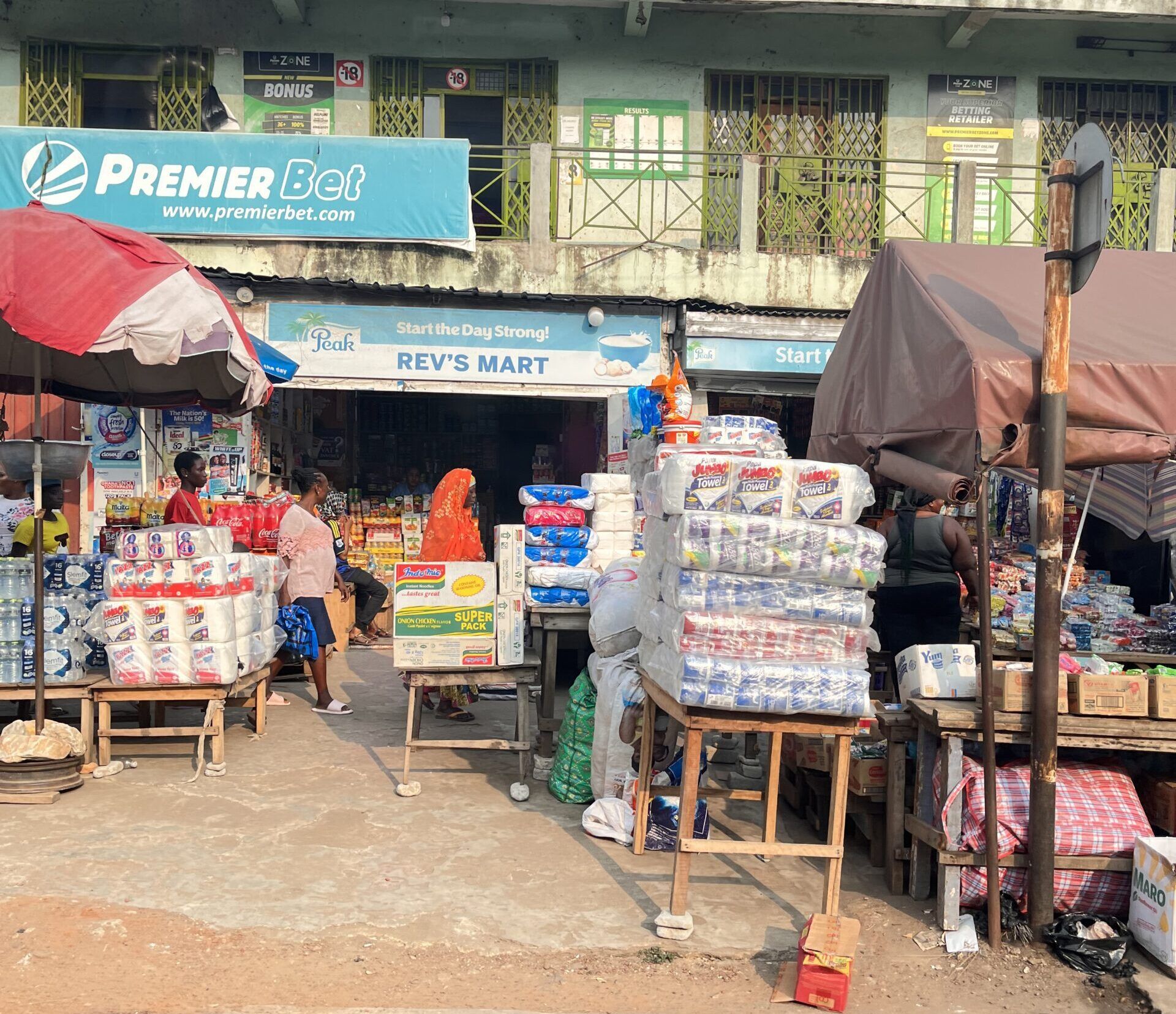
Ghana field visit, 2025. Photo courtesy of Lucia Makamure.
Looking via the Lens of the Ghana Debt Crisis
The Ghana debt crisis provides a useful illustration of why debt sustainability cannot be understood only through repayment capacity and fiscal metrics. By 2022, Ghana was facing severe debt distress, rising inflation, currency depreciation, and shrinking fiscal space. This led the government to seek International Monetary Fund support and undertake a restructuring of both external and domestic debt. The most politically and socially sensitive part of this process was the Domestic Debt Exchange Programme, through which domestic bondholders—including pension funds, financial institutions, businesses and individual investors—were requested to exchange existing bonds for new instruments with reduced value, delayed maturities and lowered returns. This domestic restructuring became one of the most contentious aspects of Ghana’s debt response because it placed a significant share of the adjustment burden on citizens and institutions within the very economy expected to drive recovery. The losses carried by domestic savers, pensioners, banks, and businesses were not only financial. It also weakened public trust, reduced household security, constrained local investment, and deepened the social effects of austerity.
In 2025, against this background while conducting my studies at the London School of Economics and Political Science as part of the Atlantic Fellows for Social and Economic Equity programme, I spoke with Ghanaians about the human side of Ghana’s debt restructuring process between 2022 and 2025. Their accounts showed that the human cost of restructuring was not limited to lost income or reduced economic opportunity. It was also experienced as fear, anger, mental health burdens, shame, and a deep breakdown of trust.
Their experiences further revealed how citizens were made to absorb the consequences of a debt policy process in which they had little meaningful voice in, as decisions negotiated between the state, creditors, and financial institutions were translated into everyday losses for people who had not been part of the policy process. The conversations also revealed how the hidden costs of debt crises are not always visible in budget tables. Citizens were often consulted too late, informed too poorly, and protected too weakly in debt policy processes that directly affect their rights and livelihoods. This is why assessing debt sustainability by asking whether a state can repay its creditors is a narrow approach. It does not consider whether the process protects citizens’ rights, include their voices, and prevent austerity measures from being imposed on the most vulnerable groups.
Takeaways for the African Continent (and the Global South At-Large)
The Ghana experience offers an important lesson not only for African countries battling debt overall, but for the whole Global South. Debt should not be treated as a purely macroeconomic matter, but as a justice, inclusion, and human rights issue. The way a government responds to debt distress can either widen structural inequalities and erode social cohesion or protect the dignity and rights of the most vulnerable citizens while advancing more inclusive societies.
This is why African leaders, creditors, and international financial institutions should build upon Africa’s existing emphasis on the social development costs of debt by translating concerns about fiscal space, health, education, and sustainable development into explicit human rights commitments within debt sustainability and restructuring frameworks. Africa’s position has already recognized that debt repayment can displace essential social spending and undermine investment in health, education, infrastructure, climate resilience, and sustainable development.
The next step is to make that recognition more robust by asking not only whether debt service crowds out development spending, but also who bears the burden of adjustment, whose voices are included in restructuring processes, and whether debt solutions protect the rights, livelihoods, and dignity of affected citizens. Therefore, the Declaration is a welcome foundation that can be strengthened through deeper citizen participation, especially by those most vulnerable to the burdens of debt crises. Africa’s debt reform agenda should explicitly recognize the human cost of debt and place people, not only creditors, at the center of debt sustainability.

Related Resources
Stay Connected
Subscribe to our newsletter and receive regular updates on our latest events, analysis, and resources.
"*" indicates required fields