UNGA81: Continuing the Trends from the Commission on the Status of Women
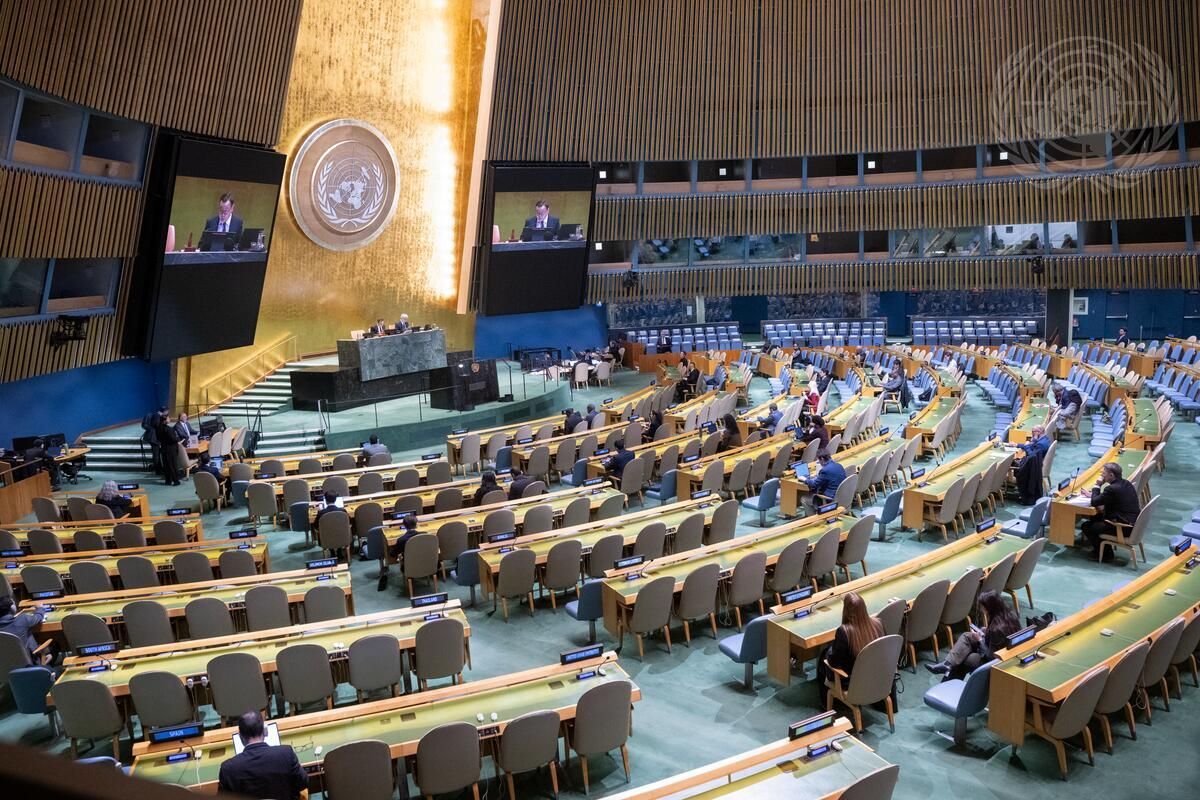
Every September, world leaders gather in New York for the opening of the United Nations General Assembly (UNGA), an opportunity to reaffirm their commitment to international cooperation and set out their priorities for addressing the world's most pressing challenges.
Gender Equality at the UN High-Level Week
This year’s 81st Session of the UN General Assembly High-Level Week took place against a backdrop of deepening geopolitical divisions, ongoing conflicts, and growing questions about the future of multilateralism. As governments outlined their visions for international cooperation, however, one issue received notably limited attention: gender equality. Despite its centrality to the 2030 Agenda for Sustainable Development and its connections to peace, security, and development, gender equality appeared to occupy a relatively marginal place in the political priorities articulated by world leaders. In many senses, this reflects not only a lack of progress but also backsliding, given the relative prominence of calls for gender equality in previous high-level speeches. It also contrasts with the attention paid this year to nominating women candidates for the next Secretary-General.
The limited attention afforded to gender equality was accompanied by the continued underrepresentation of women at the highest levels of multilateral diplomacy. Women accounted for just 14 percent of speakers during the General Debate, a marginal increase from 12 percent in 2025. While initiatives such as the high-level dialogue on reinvigorating feminist multilateralism—convened by Mexico, UN Women, and Karama in collaboration with member states and regional and civil society partners—demonstrated continued efforts to champion gender equality, these discussions stood in contrast to its limited prominence across the broader political agenda. At a time when progress on gender equality remains uneven and hard-won gains face growing pressure, this raises important questions about the political will to sustain existing commitments, let alone advance new ones.
Gender Equality at UN Committee Meetings
This trend has continued in the Second Committee of the 81st Session of the General Assembly, which considers economic and financial issues. While debating an agenda item on eradicating poverty, very few statements mentioned gender or women’s participation, despite “Women in Development” being a sub-item of the debate. In addition, during the First Committee, references to the Women, Peace and Security Agenda and the importance of women’s full, equal, and meaningful participation in disarmament and international security were few and far between. While Thailand did manage to deliver a joint statement on gender and disarmament, something that usually happens annually, this year’s statement was supported by 75 member states, down from 92 member states in 2025.
Is this a Concerning Trend?
This apparent deprioritization of gender equality echoes concerns we raised earlier this year in our analysis of the 70th session of the Commission on the Status of Women (CSW70). In that piece, we argued that the politics of gender equality at the UN were undergoing a troubling shift. Rather than building on decades of progress to advance new commitments, governments were increasingly focused on defending existing agreements against efforts to weaken or reopen them. This presents a different, but related, challenge to the explicit pushback witnessed at CSW70. Commitments to gender equality can be weakened not only through efforts to renegotiate agreed language or roll back established norms, but also through declining political attention and a failure to translate existing commitments into action. Both of these trends appear increasingly frequent in multilateral fora.
We also cautioned that the growing reliance on procedural votes, traditionally avoided in negotiations on gender equality, reflected a broader erosion of consensus-based multilateral cooperation. Six months later, developments during the 81st session of the General Assembly suggest that these trends are not only continuing, but becoming increasingly entrenched. Developments in the General Assembly’s First Committee, which deals with disarmament and international security, offer a striking example. For the first time in its history, the Committee was unable to adopt its programme of work by consensus. Instead, what is ordinarily a routine procedural decision was put to a vote, with the programme ultimately adopted on October 7 by 135 votes in favor, 7 against, and 5 abstentions. Although the disagreement was not directly related to gender equality, rather there was a lack of agreement around the time limit for member states in the general and thematic debates, its significance extends beyond the specific circumstances of the First Committee. It illustrates how even the procedural foundations of multilateral diplomacy are becoming sites of political contestation, complicating governments’ ability to cooperate on shared priorities.
Issues of gender equality are vital across the three pillars of the UN’s work on peace and security, development and human rights. The deprioritization and politicization of this topic signals a broader trend of growing fragmentation and declining trust in multilateral spaces, while risking the erosion of existing commitments. As member states discuss what reforms are needed to make the UN relevant to today’s challenges, gender equality risks falling off the agenda. By contrast, consensus-building through the identification of shared priorities can not only advance gender equality but also serve to strengthen multilateral cooperation at a time of immense turmoil.
“General Assembly Meets on Question of Equitable Representation and Increase in Membership of Security Council,” October 2026. © UN Photo/Eskinder Debebe.


Stay Connected
Subscribe to our newsletter and receive regular updates on our latest events, analysis, and resources.
"*" indicates required fields