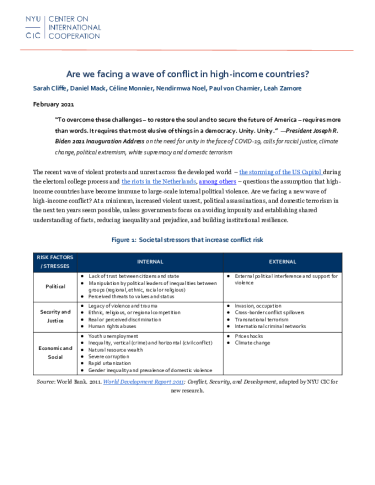
The recent wave of violent protests and unrest across the developed world – the storming of the US Capitol during the electoral college process and the riots in the Netherlands, among others – questions the assumption that high-income countries have become immune to large-scale internal political violence. Are we facing a new wave of high-income conflict? At a minimum, increased violent unrest, political assassinations, and domestic terrorism in the next ten years seem possible, unless governments focus on avoiding impunity and establishing shared understanding of facts, reducing inequality and prejudice, and building institutional resilience.
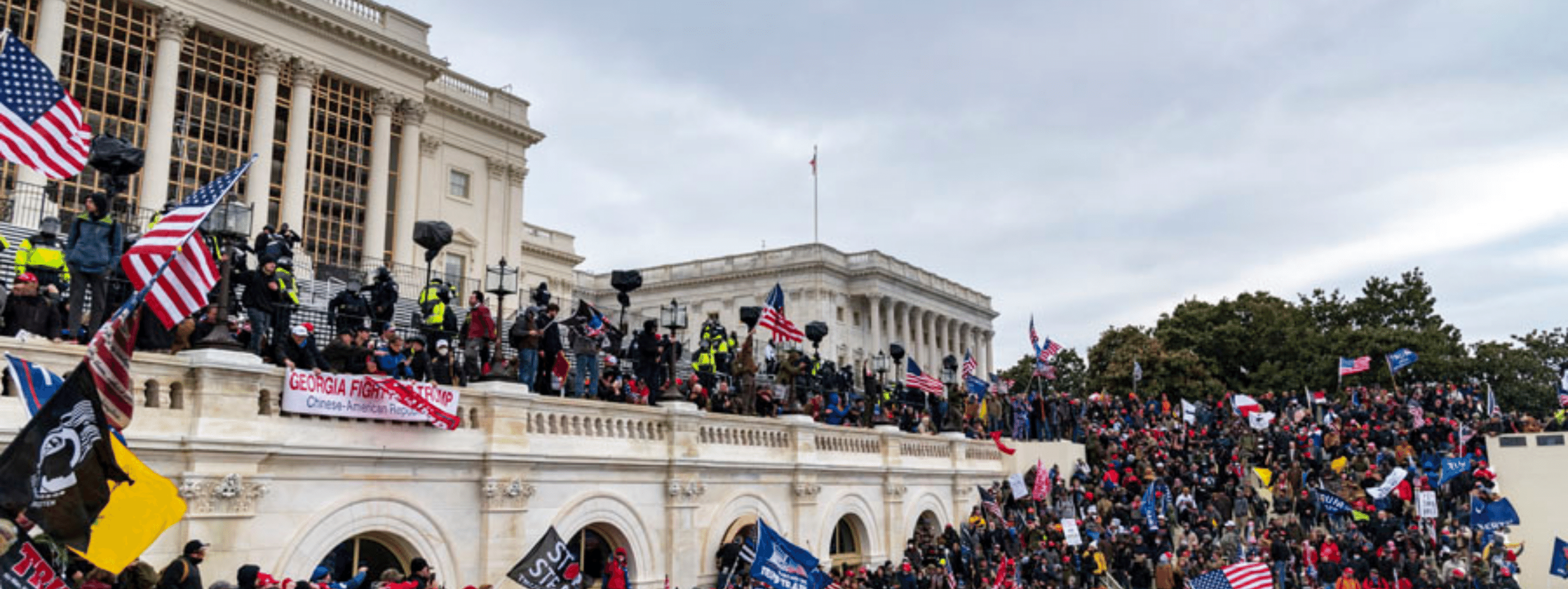
This analysis examines whether these recent events augur a wider shift in conflict risk to high-income countries, akin to the shift seen from low to middle-income countries 20 years ago. Given these events, this analysis systematically reviews conflict risks in high-income countries, as well as offers a framework that has been widely applied in the developing world to examine the risk factors for violent conflict in wealthy countries, including second generation impacts of COVID-19.
Read the full analysis here