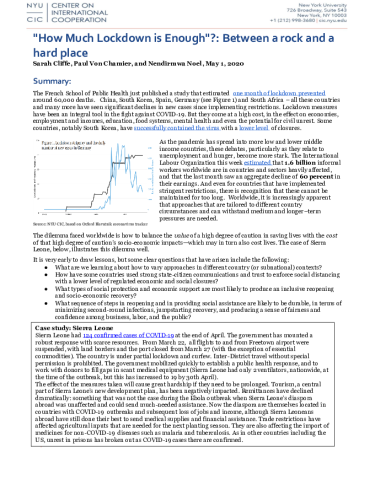
Lockdown measures have been an integral tool in the fight against COVID-19. But they come at a high cost, given their impacts on economies, employment and incomes, education, food systems, mental health and even the potential for civil unrest.
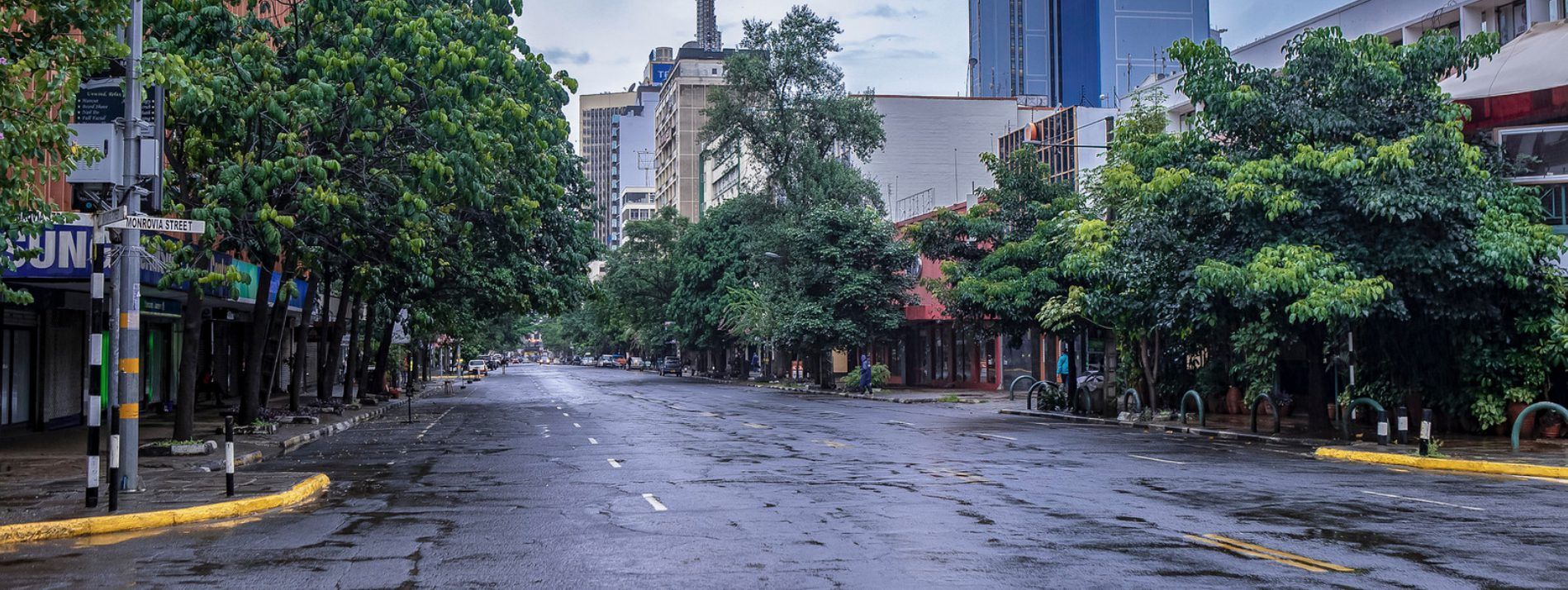
Photo: Empty streets during lockdown in Nairobi, Kenya in April 2020 (CC BY-NC-ND 2.0 World Bank/Sambrian Mbaabu).

This policy briefing by Sarah Cliffe, Paul von Chamier, and Nendirmwa Noel examines how countries are balancing the need for lockdown with policy measures to alleviate their effects and plans for reopening. It provides comparative data on the stringency of lockdowns, showing that while there has been a convergence towards more stringent measures over time, there is also wide variation among countries—even among those in the same region, or income group. A brief case study of Sierra Leone and snapshot examples of policy from ten other countries illustrates the range of answers to the question of how much lockdown is enough.

Download the full briefing here.
More Resources

  • Person at a podium in the UN headquarters.
    Publication: Policy Brief June 1, 2026 Promoting and Defending Multilateralism

    When the General Assembly Votes for its President

    This policy brief explores “politically governed authority," or real influence, constrained in form and scope by the preferences of the member states that constitute the institution. It proceeds through selection, function, capacity, and reform and uses the framework established in United Nations resolution 79/327, operative paragraph 49, to organize the implications of this design across four dimensions: efficiency, accountability, transparency, and institutional memory.

Stay Connected

Subscribe to our newsletter and receive regular updates on our latest events, analysis, and resources.

"*" indicates required fields

This field is for validation purposes and should be left unchanged.